
 EN
EN
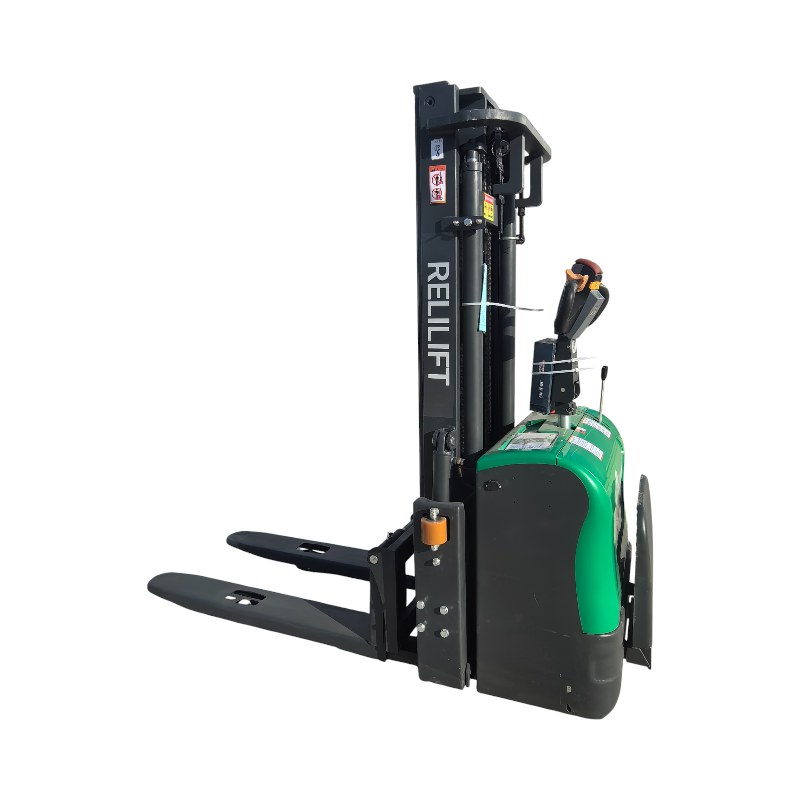
What Is a Pallet Stacker and Why It Matters in Modern Warehousing
Pallet stackers are those small but mighty tools used for lifting, moving around, and stacking pallets full of goods. They're especially handy in tight spaces where bigger equipment just won't fit, like inside crowded warehouses or distribution centers. These little workhorses can navigate through narrow aisles and operate under low ceilings too, which means they can actually get products up high where there's more room to store things. Why do so many businesses rely on them? Well, there are basically three main reasons why pallet stackers have become such an important part of today's logistics operations:
- Space Efficiency: Enabling high-density storage in narrow-aisle facilities without sacrificing accessibility
- Operational Agility: Cutting manual handling time by up to 70%, accelerating stock rotation and order fulfillment
- Cost Reduction: Delivering 50% lower acquisition costs than industrial forklifts while maintaining core functionality (Logistics Management 2024)
For businesses in e-commerce and retail distribution where fast-moving inventory is basically table stakes, pallet stackers help keep operations running smoothly without getting stuck at key points in the process. Workers can quickly move things around, restock shelves, and get products back in place faster than ever before. The machines are built with worker comfort in mind too. According to recent data from OSHA, companies that switch from manual lifting to proper stacker operation see about 40 percent fewer cases of muscle and joint strain among employees. With supply chains needing to handle more volume while keeping costs down and systems reliable, investing in good quality pallet stackers isn't just smart business anymore it's becoming essential for staying competitive in today's market.
Key Types of Pallet Stackers: Manual, Electric, and Semi-Automatic
Understanding the core types ensures equipment aligns precisely with operational scale, environment, and safety requirements.
Manual Pallet Stackers for Light-Duty Applications
Manual pallet stackers depend completely on what the operator can do for moving things around and lifting with hydraulics. They work best in small places where people don't need to lift stuff very often or when the weight stays below about 1,500 kilograms. Since there's no need for electricity or fuel, companies save money right off the bat compared to electric versions, maybe even half the initial cost sometimes. Taking care of these machines isn't complicated at all, but workers might get tired after using them for long periods. That's why manual stackers tend to be popular in businesses watching their wallets closely, handling only light volumes day to day, or situations where being able to move equipment around freely matters more than having fancy automated systems.
Electric Pallet Stackers for High-Volume Efficiency
Electric pallet stackers run on battery power for moving around warehouses and lifting goods, which cuts down on worker fatigue and keeps productivity steady throughout long workdays. These machines can handle weights over 2000kg, making them essential equipment at busy places like regional warehouse hubs where speed matters most. The newer models come equipped with things like regenerative braking systems that capture energy when slowing down, plus lithium-ion batteries that last between eight to ten hours before needing a recharge. Many warehouses switching to electric versions have seen their daily pallet movements jump by about 30 percent according to Logistics Management from last year. Plus there's less damaged inventory since the lifting mechanism is so much smoother and controlled compared to older manual or gas powered alternatives.
Semi-Automatic Stackers with Enhanced Safety Features
Semi-automatic stackers mix manual steering with electric-powered lifting, giving operators complete control when moving around while still providing consistent and accurate vertical motion. The design brings together important safety features like automatic load stabilizers and emergency descent valves too. According to Industrial Safety Journal from last year, these systems cut down on accidental drops by almost half. These machines work really well in tight spaces between shelves, inside cold storage facilities, or wherever workers need to adjust heights often throughout their shifts. Plus, since they're built in modules, replacing parts becomes much easier which means technicians spend about a quarter less time doing regular maintenance checks compared to older models.
Critical Selection Criteria for Industrial Pallet Stackers
Load Capacity and Lift Height Requirements
When choosing equipment, first check what's the heaviest pallet weight and figure out where the highest lift point needs to be, taking into account things like beam clearance above, any obstacles hanging around overhead, and how flat the floors actually are. Going beyond what the specs say can lead to serious problems down the road, not just damage to property but also risk of injury. The numbers back this up too – according to Ponemon Institute research from last year, each accident involving forklifts costs businesses about $740,000 on average. A good rule of thumb is to pick something with at least 10%, maybe even 15%, extra capacity built in. Most standard machines work fine for loads between 1 and 3 tons and can reach heights of around 6 meters. But if dealing with tight spaces or those tall storage racks stacked multiple levels high, then special units might be needed that can get up past 10 meters. Don't forget to measure exactly how high it needs to go – sometimes there's more space between beams than meets the eye when planning lifts.
Maneuverability and Aisle Width Compatibility
Throughput hinges on how well a stacker navigates your tightest aisles. Prioritize units engineered for confined spaces:
| Maneuverability Factor | Minimum Requirement | Ideal Specification |
|---|---|---|
| Turning Radius | < 20% aisle width | < 15% aisle width |
| Mast Width | < aisle clearance | +10cm buffer zone |
| Cornering System | Basic | 3-wheel steering |
All-wheel or articulated steering reduces required aisle width by up to 30% compared to conventional designs – critical for retrofitting older facilities. Always conduct real-world path testing before finalizing procurement.
Battery Life, Charging Infrastructure, and Maintenance Needs
For electric and semi-automatic models, battery technology directly impacts uptime and total cost of ownership. Lithium-ion batteries deliver 8–10 hours of runtime and charge fully in under one hour – versus lead-acid’s 4–6 hour runtime and 8-hour recharge cycle. Align infrastructure to your operation:
- Facilities moving 400+ pallets/day benefit from hot-swap battery systems
- Medium-volume sites gain efficiency from opportunity charging at staging points
- All users should schedule preventive maintenance every 250 operating hours
Proactive service cuts annual repair costs by 40%. Prioritize stackers with onboard diagnostics that flag wear patterns or component degradation before failure occurs.
Top Pallet Stacker Applications Across Industries
E-commerce Fulfillment Centers
Most e-commerce warehouses rely heavily on pallet stackers to keep up with the crazy pace of orders these days. The smaller electric versions really speed things up for goods-to-person operations in those tight spaces where racks are packed closely together. These machines move pallets around from where workers pick items, through the cross docking area, all the way to packing stations, and they do this without taking up much space on the warehouse floor. When companies focus on stacking vertically instead of spreading out horizontally, they can cut down their needed warehouse space by roughly 30 percent. This means faster delivery times for customers expecting packages the same day or first thing tomorrow morning, and it works even if the company doesn't need to build a bigger facility.
Cold Storage and Food Distribution Facilities
When working in freezing conditions, specially designed pallet stackers help keep products safe while staying within regulations. These machines come equipped with hydraulics that resist frost buildup, electronics protected against moisture, and frames made from stainless steel to handle tough warehouse conditions. The lifting mechanism is engineered to be very precise and reduce vibrations so nothing gets damaged when rotating pallets. This matters because sudden temperature changes can actually damage sensitive goods. Maintaining consistent temperatures throughout the entire supply chain isn't just good practice it's required by FDA guidelines for foods that need special handling during transport and storage.
FAQ Section
Q1: What is a pallet stacker?
A1: A pallet stacker is a compact machine used for lifting, moving, and stacking pallets in warehouses and distribution centers, especially in areas with tight spaces.
Q2: What types of pallet stackers are available?
A2: There are three primary types of pallet stackers: manual, electric, and semi-automatic, each suitable for different operational requirements.
Q3: How do I choose the right pallet stacker?
A3: Consider factors like load capacity, lift height, maneuverability, battery life, and maintenance needs when selecting a pallet stacker.
Q4: What industries benefit most from pallet stackers?
A4: Industries such as e-commerce fulfillment and cold storage facilities benefit significantly from using pallet stackers due to their efficiency and space-saving capabilities.