
 EN
EN
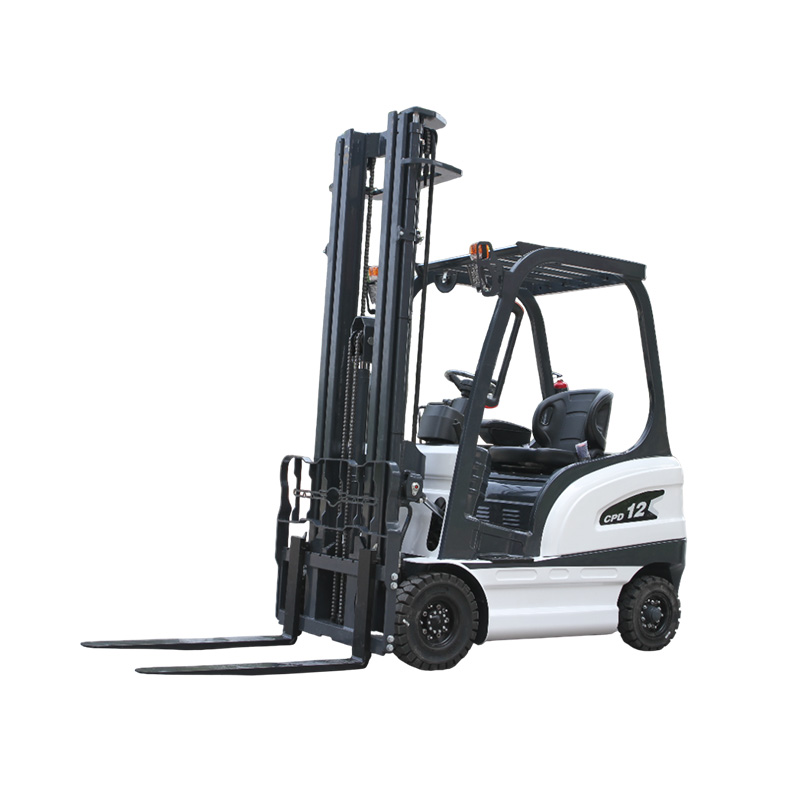
Understanding Key Selection Criteria for Electric Forklift Trucks for Sale
Selecting electric forklift trucks for sale requires aligning three operational variables with equipment capabilities: load dynamics, facility layout, and energy efficiency. Overlooking these factors leads to 23% higher operational costs in material handling environments (MHEDA 2024).
Matching forklift specifications to operational needs: load weight, lift height, and aisle width
Forklifts should handle 15–20% above your maximum documented load weight to accommodate irregular shipments. For racking heights exceeding 30 feet, ensure the mast supports dual-stage lifting. In narrow aisles under 9 feet, choose trucks with 72" overall width and rear-wheel steering for precision maneuverability.
Evaluating warehouse layout and material flow to determine ideal forklift type
Facility maps should show where people and equipment actually move around the warehouse. Mark those main routes connecting loading docks to storage areas, note how wide turns need to be at intersections, and don't forget about headroom under mezzanines either. Warehouses moving over 150 pallets every hour really need those combo trucks that can lift stuff and then roll it across the floor without switching vehicles. For cross docking work, most operators go with electric pallet jacks rated for at least 4500 pounds and equipped with full 360-degree visibility. These machines zip through narrow aisles quickly while keeping workers safe from blind spots during fast-paced operations.
Comparing technical specifications for smarter purchasing decisions
Use this framework to evaluate performance:
| Specification | Threshold Value | Operational Impact |
|---|---|---|
| Battery Voltage | 48V–80V | Determines torque for ramp navigation |
| Lift Speed | 90–140 fpm | Impacts pallet throughput per hour |
| Turning Radius | ≈ 90" | Essential for narrow-aisle agility |
Prioritize models with regenerative braking, which extends battery life by 18% in stop-and-go applications.
Types of Electric Forklift Trucks for Sale by Class and Application
Electric Forklift Classifications: Class I, Class III, and Class VI Explained
When it comes to electric forklifts, they generally fall into different categories depending on how they're built and what job they do. Let's start with Class I - these are basically electric rider trucks meant for use inside warehouses where nobody wants smoke coming out of machines. They run clean and make almost no noise at all. Then there's Class III which refers to those walk behind models like pallet jacks and stackers. These little guys work best when space is really tight and things need moving around at ground level. Finally, we get to Class VI, which are actually tow tractors designed specifically for pulling several carts at once through big logistics centers or busy airport terminals. The way these classifications line up with OSHA standards makes it much easier for companies to pick the right equipment for their specific warehouse operations.
Common Models: Pallet Jacks, Stackers, Tow Tractors, and Their Use Cases
Walkie pallet jacks, which fall into Class III, work great in retail stockrooms where workers need to move items weighing less than 5,000 pounds around tight spaces. These machines make it possible to get heavy boxes from one end of the warehouse to another without breaking a sweat. For manufacturers needing extra space, high-capacity stackers come in handy when storing goods vertically instead of just piling them horizontally. Electric tow tractors belong to Class VI equipment and really shine in places like airports where bags need to be moved quickly between terminals or in auto factories where parts have to travel long distances across the production floor. The different models each handle their own specialty tasks best stackers reach higher shelves, pallet jacks navigate narrow aisles, while tow tractors cover those longer hauls across facilities.
Narrow-Aisle Solutions: Reach Trucks and Order Pickers for High-Density Storage
Warehouses that need to make the most of tight spaces often turn to reach trucks with those extendable forks or order pickers featuring operator platforms. These machines can really boost storage density in aisles less than nine feet wide. Some industry reports from early 2024 suggest warehouses using these specialized equipment see around a 30 to 40 percent improvement in how they utilize their floor space compared to regular forklifts. What makes this possible? Things like the pantograph reach mechanism allow operators to grab items deep inside racks while maintaining stability. The fine control over side-to-side movement is another key factor that lets workers maneuver safely even in the most cramped racking configurations.
Selecting by Application: Aligning Forklift Class With Industry-Specific Demands
Match forklift class to industry requirements for optimal performance:
- E-commerce fulfillment centers: Class I riders with 4,000–6,000 lb capacity for pallet handling
- Pharmaceutical cold storage: Class III electric pallet jacks with sealed components
- Automotive parts distribution: Class VI tow tractors with 15,000+ lb towing capacity
The 2025 Forklift Market Segmentation Report notes that 78% of food and beverage facilities now use Class III trucks for hygienic material handling, underscoring the value of application-specific selection.
Load Capacity, Lift Height, and Battery Requirements for Optimal Performance
Sizing Your Forklift: Aligning Load Capacity and Lift Height With Racking Systems
When picking out electric forklifts, go for models that have a capacity about 15 to 20 percent higher than what's normally needed. Safety margins matter here, plus it gives room when things get busy on site. Take this as an example: if someone needs a forklift rated at 5,000 pounds, they can actually work with loads around 4,250 pounds comfortably. As far as lift heights go, make sure the mast reaches just past the highest point of storage racks. Add roughly six inches extra space because nobody wants those awkward moments where the forks barely clear the top shelf. Warehouses dealing with stacks reaching twenty feet high should look for masts capable of handling 21 feet instead. That little bit of extra length makes all the difference when maneuvering pallets into place without risking damage.
Battery Voltage (36V, 48V, 80V): Choosing the Right Power System
Higher voltage systems deliver greater torque and better performance under heavy loads:
| Voltage | Ideal Usage | Average Runtime* |
|---|---|---|
| 36V | <6hr light duty | 4–5.5hr |
| 48V | 8hr medium duty | 6–7.5hr |
| 80V | 12hr heavy duty | 10–11.5hr |
*Based on 2024 Industrial Energy Consortium testing of lead-acid batteries in warehouse conditions
Lithium-ion batteries offer 30% faster charging than traditional options, reaching 80% charge in 1.5 hours—ideal for continuous operations.
Charging Infrastructure Planning: Runtime, Charging Cycles, and Efficiency
Track daily forklift usage in 15-minute intervals. Operations exceeding 7 hours of daily use should select batteries with 600+ amp-hour capacity. For conventional charging, maintain three batteries per truck to support continuous shifts through rotation.
Opportunity Charging vs. Battery Swapping: Minimizing Downtime in Continuous Operations
Opportunity charging adds 1–1.5 hours of runtime in 10 minutes during operator breaks, enabling seamless integration with scheduled pauses. Battery swapping takes 7–9 minutes but requires duplicate power packs and dedicated space. Lean operations with predictable schedules can achieve 97% uptime by aligning opportunity charging with mandatory break periods.
Evaluating Total Cost of Ownership and Operational Benefits
Advantages of Electric Forklift Trucks for Sale: Low Emissions, Quiet Operation, Reduced Maintenance
Electric forklifts operate at 60% lower noise levels (MHE Industry Report 2023) and produce zero direct emissions—critical for indoor air quality and worker comfort. Their simplified drivetrains eliminate the need for oil changes, spark plugs, and exhaust repairs, significantly reducing maintenance demands.
Total Cost of Ownership: Comparing Upfront Price, Energy Use, and Service Costs
Although electric forklifts carry a 15–20% higher initial cost than diesel models, their total cost of ownership over 10 years is 30–45% lower due to energy efficiency and reduced service needs. Key contributors include:
- Energy costs: Lithium-ion systems operate at $0.08–$0.12 per kWh vs. $3.50–$4.00 per gallon for diesel
- Downtime reduction: Regenerative braking extends brake life by 50%
- Battery lifespan: Modern lithium packs last 8–10 years, nearly double the 4–5 year life of lead-acid batteries
Ideal Industries and Applications: From E-Commerce to Food and Beverage
E-commerce fulfillment centers benefit from electric forklifts' fast acceleration and precision in narrow aisles. Food and beverage facilities leverage their emission-free operation to comply with USDA sanitation standards. Cold storage operations gain 18–22% in productivity by eliminating warm-up times associated with propane-powered units.
Operator Ergonomics, Safety, and Environment Suitability
Modern electric forklifts emphasize operator-centered design to improve safety, comfort, and productivity. Matching these features to environmental conditions ensures long-term performance.
Design features that enhance operator comfort and reduce fatigue
Adjustable air-suspension seats, tilt-steering columns, and vibration-dampening systems reduce physical strain during extended shifts. Climate-controlled cabs with 360° visibility lower cognitive fatigue by 18% compared to standard models (Industrial Ergonomics Journal 2023), aligning with OSHA guidelines for preventing musculoskeletal disorders.
Safety systems and environmental fit: indoor air quality and outdoor limitations
Electric forklifts maintain indoor air quality with zero emissions, making them ideal for enclosed environments. However, they are less suited for extreme outdoor conditions. Key safety technologies include:
- Load moment indicators to prevent tip-overs
- Automatic speed reduction on inclines
- Blue light projection systems to alert pedestrians
While lithium-ion batteries eliminate carbon monoxide risks, they require dry, temperature-controlled charging areas. Facilities using ergonomic electric forklifts reported 32% fewer accidents than those relying on internal combustion fleets, according to a 2023 warehouse safety analysis.
FAQs
What factors should I consider when selecting an electric forklift?
Consider load dynamics, facility layout, energy efficiency, forklift specifications, and industry-specific demands to choose the right electric forklift for your operation.
How do I determine the ideal battery voltage for my forklift?
Choose battery voltage based on usage: 36V for light duty, 48V for medium duty, and 80V for heavy duty operations.
What are the main advantages of electric forklifts over diesel models?
Electric forklifts offer lower emissions, quieter operation, reduced maintenance needs, and a lower total cost of ownership over time compared to diesel models.
Which forklift class is suitable for narrow aisle solutions?
Reach trucks and order pickers are ideal for narrow aisle solutions as they enhance storage density and maneuverability in tight spaces.
Table of Contents
- Understanding Key Selection Criteria for Electric Forklift Trucks for Sale
-
Types of Electric Forklift Trucks for Sale by Class and Application
- Electric Forklift Classifications: Class I, Class III, and Class VI Explained
- Common Models: Pallet Jacks, Stackers, Tow Tractors, and Their Use Cases
- Narrow-Aisle Solutions: Reach Trucks and Order Pickers for High-Density Storage
- Selecting by Application: Aligning Forklift Class With Industry-Specific Demands
- Load Capacity, Lift Height, and Battery Requirements for Optimal Performance
- Sizing Your Forklift: Aligning Load Capacity and Lift Height With Racking Systems
- Battery Voltage (36V, 48V, 80V): Choosing the Right Power System
- Charging Infrastructure Planning: Runtime, Charging Cycles, and Efficiency
- Opportunity Charging vs. Battery Swapping: Minimizing Downtime in Continuous Operations
- Evaluating Total Cost of Ownership and Operational Benefits
- Operator Ergonomics, Safety, and Environment Suitability
- FAQs