
 EN
EN
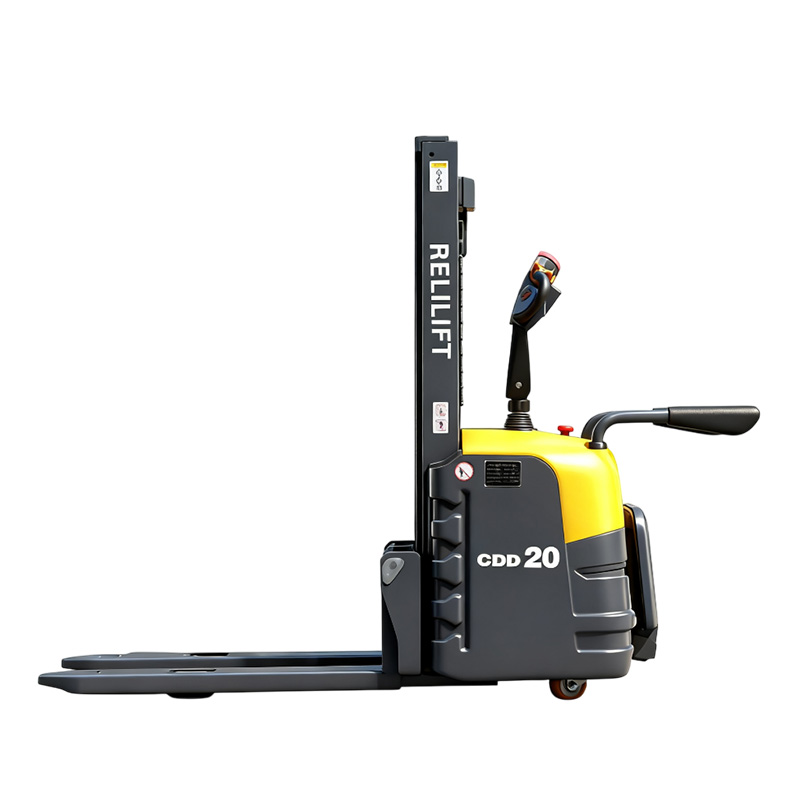
Pre-Operation Inspection and Component Readiness
Thorough pre-operation inspections reduce equipment failure risks by 67% in industrial settings, according to industry reports (2023). For electric stacker forklifts, these checks ensure operational safety, regulatory compliance, and minimal unplanned downtime.
Key Components to Inspect on an Electric Stacker Forklift
Begin with structural assessments of load-bearing elements:
- Forks: Check for cracks or deformation exceeding 10% of original thickness
- Mast Chains: Verify proper tension and lubrication
- Hydraulic Systems: Inspect hoses for leaks and cylinder alignment
- Control Panel: Test emergency stop function and lift/lower responsiveness
A 2023 analysis found 42% of electric stacker incidents stemmed from undetected hydraulic leaks or compromised mast components, making these inspections critical.
Daily Maintenance and Hydraulic, Tire, and Control Checks
Implement a three-stage verification process:
| Check Type | Frequency | Focus Areas |
|---|---|---|
| Visual Assessment | Daily | Tire pressure, visible leaks |
| Functional Test | Daily | Brakes, steering, lift speed |
| Diagnostic Review | Weekly | Battery health, error codes |
Ensure hydraulic fluid levels remain within 5% of manufacturer recommendations and that control panels display no warning indicators. Operators should document tire tread depth weekly, as uneven wear contributes to 32% of stability issues. These protocols align with standardized inspection frameworks designed for early defect detection.
Operator Training and Safe Handling Techniques
Essential Training and Refresher Courses for Electric-Powered Forklift Operators
According to OSHA regulations, anyone operating an electric stacker forklift needs to go through proper certification that includes both classroom learning and actual hands on training time. The training program has to address several key areas including how loads behave, what keeps things stable while moving around, and identifying potential dangers at work sites. Companies also need to schedule refresher sessions either every three years or whenever there's been a close call accident. Facilities that stick to this annual refresher routine see about 43 percent drop in lifting related problems according to data from Industrial Safety Journal back in 2023. Good programs will actually simulate emergency situations where sudden stops happen or when there are unexpected obstacles above the truck.
Safe Operating Practices: Speed, Visibility, and Pushing vs. Pulling Loads
Operators should keep moving at around 5 miles per hour when working in open spaces, slowing down to about 3 mph whenever people are nearby. Better visibility comes from keeping loads tilted back while driving, plus having someone watch from the side when things get crowded. Most warehouse workers know that pushing rather than pulling gives them better grip on what they're handling, which cuts down on tipping incidents by roughly 27% inside tight aisles. Before backing up always check those blind spots first because according to recent safety data, nearly one out of every five accidents involving electric stackers happens when drivers can't see behind them clearly (Warehouse Safety Report cites this figure for 2024).
Walkie Stacker Posture and Safety Protocols to Prevent Injuries
When working with walkie stackers, keep the spine in a neutral position while allowing the knees to bend just a bit. Hold onto the handles so they sit around elbow level which helps prevent those annoying shoulder pains later on. Feet should be placed roughly as wide as the shoulders for better balance during operation. Companies that roll out proper posture training programs tend to see about a third fewer musculoskeletal injuries each year according to industry reports. Always remember to lock the brakes securely before making any adjustments to cargo loads. Starting shifts with some basic stretches focusing on the lower back area and wrists can make all the difference in maintaining comfort throughout long workdays.
Combining equipment-specific training with ergonomic protocols cuts worker compensation claims by 19%. For advanced guidance, consult OSHA-compliant training frameworks integrating IoT-based fatigue monitoring systems.
Load Management and Weight Limit Compliance
Understanding Load Capacity and Center of Gravity in Electric Stackers
Getting good at managing loads really begins when someone grasps how much weight an electric stacker can handle depends on where that weight sits in relation to the center of gravity. Most manufacturers set those weight limits according to how far back or forward the cargo is from the front wheels, something many operators tend to forget about entirely. Take this for instance: shifting around a 1,500 pound load only six inches toward the front end cuts down what's considered safe carrying capacity by roughly fifteen percent according to Material Handling Institute research from last year. Even though newer models come equipped with these fancy load moment indicators, nobody should ever skip checking things manually against those old fashioned load charts. They still matter quite a bit.
Best Practices for Safe Load Handling and Avoiding Overloading
Follow three key rules to prevent overloading:
- Verify load weight using calibrated scales before operation
- Position bulky items close to the mast to minimize forward tilt
- Avoid lifting loads higher than necessary during transport
A 2023 safety audit revealed that 34% of electric stacker incidents involved improperly secured loads shifting mid-move. Use pallet restraints and maintain speeds below 5 mph when carrying unstable cargo.
Case Study: Consequences of Overloading an Electric Stacker Forklift
A manufacturing facility ignored load warnings, leading to catastrophic hydraulic failure:
| Overload Percentage | Consequence | Financial Impact |
|---|---|---|
| 10% | Accelerated tire wear | $2,800 replacement cost |
| 18% | Mast deformation | 16 hours of downtime |
| 25% | Control system malfunction | $14,200 in repairs |
This incident underscores why compliance is non-negotiable—overloaded electric stackers face a 73% higher risk of mechanical failure within 12 months.
Battery Care, Charging Safety, and Longevity Optimization
Proper Charging Procedures and Charging Station Setup
Battery longevity begins with temperature-controlled charging stations and disciplined charging habits. A 2024 industrial battery study found that maintaining environments between 50–86°F (10–30°C) reduces degradation risks by 34%. Key practices include:
- Using manufacturer-approved chargers with automatic shutoff
- Avoiding full discharges (maintain 20–30% minimum charge)
- Implementing sequential charging for multi-unit fleets
Extending Battery Life: Preventing Thermal Runaway and Degradation
Lithium-ion batteries lose about 2.3% annual capacity under optimal conditions, but poor thermal management triples this rate. To prevent thermal runaway:
- Conduct monthly cell voltage checks (max 0.05V variance)
- Install monitoring systems that trigger alarms at 122°F (50°C)
- Maintain state-of-charge between 20–80% during shifts
Fast-Charging vs. Opportunity Charging: Efficiency vs. Longevity Trade-offs
| Factor | Fast-Charging | Opportunity Charging |
|---|---|---|
| Cycle Life Impact | 15–20% reduction | <5% reduction |
| Charge Time | 1–2 hours | 8–15 minutes per break |
| Daily Throughput | +25% | +12% |
| 5-Year TCO | $1,840 higher | Baseline |
Facilities using hybrid strategies (60% opportunity charging, 40% scheduled fast charges) achieve 19% longer battery lifespan while sustaining 88% productivity.
Electric Stacker Forklift: Advanced Usage Tips
Maximizing Efficiency in Tight Spaces and Future Operational Trends
Maneuvering Electric Stackers in Narrow Aisles: Turning Radius and Techniques
Electric stacker forklifts excel in confined spaces when operators master turning radius limitations and steering techniques. A 2023 study by the Material Handling Institute found facilities reduced maneuvering errors by 40% after adopting aisle-width calibration protocols. Effective strategies include:
- Performing pre-shift checks on rear wheel alignment
- Using "crab steering" modes for diagonal movement in sub-8-foot aisles
- Installing infrared sensors to prevent racking collisions
Improving Material Handling Efficiency with Electric Forklifts
Modern electric stackers achieve 22% faster pallet cycle times than legacy models, thanks to regenerative braking and ergonomic controls that reduce operator fatigue. Facilities with organized workflow lanes and standardized pallet orientations report 18% higher hourly throughput.
IoT Integration and Fleet Management: The Future of Electric Stacker Operations
The shift toward smart warehouses has led 67% of manufacturers to adopt IoT-enabled electric stackers since 2022. These systems deliver:
| Feature | Benefit |
|---|---|
| Real-time load tracking | Reduces inventory discrepancies by 29% |
| Predictive maintenance alerts | Lowers repair costs by $18k/year per fleet |
| Battery health monitoring | Extends battery lifespan by 800+ cycles |
A 2025 industry forecast projects that 84% of electric stackers will feature autonomous repositioning capabilities by 2028, enabling continuous operation during shift changes.
FAQ
What pre-operation checks are essential for electric stacker forklifts?
Essential pre-operation checks include inspecting forks for cracks, verifying mast chain tension, checking hydraulic system hoses for leaks, and testing all control panel functions.
How often should maintenance checks be performed on electric stacker forklifts?
Maintenance checks should be done daily, focusing on visual and functional assessments such as tire pressure and brake performance, with weekly diagnostic reviews for battery health and error codes.
Why is operator training important for electric stacker forklifts?
Operator training is crucial to ensure safe handling, better understanding of load dynamics, and to comply with OSHA regulations. Regular training reduces the likelihood of lift-related accidents.
What is the ideal battery charging strategy for electric stacker forklifts?
For optimal battery life, use manufacturer-approved chargers, avoid full discharges, and apply a mix of opportunity and fast charging as suited to sustaining productivity and prolonging battery lifespan.