
 EN
EN
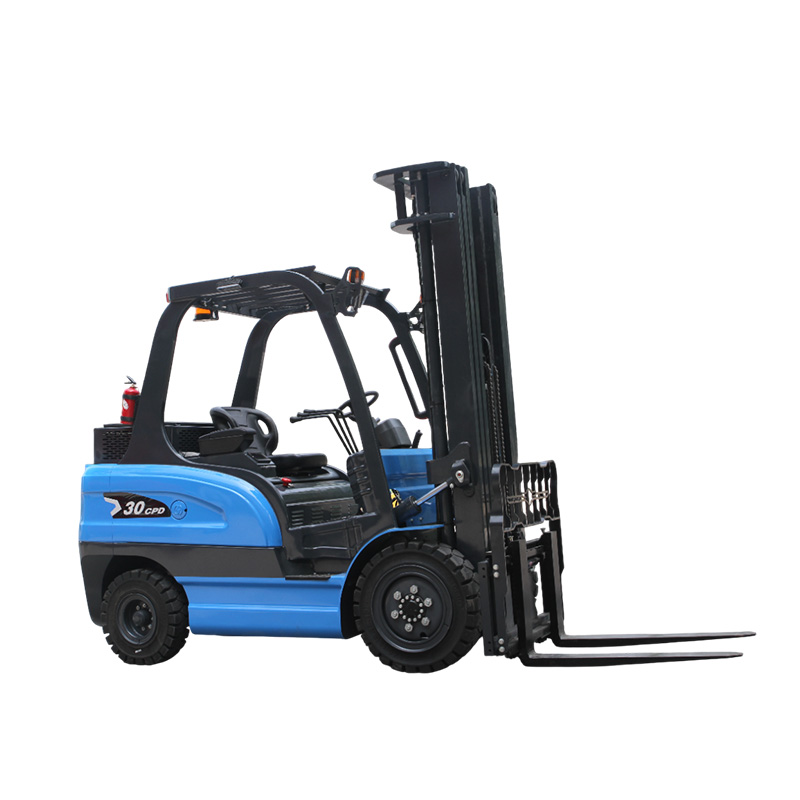
Electric vs. Gas Forklifts: Key Differences and Industry Shift
Phenomenon: Rising Shift Toward Electric Material Handling
More and more warehouses and distribution centers are swapping out their old gas guzzlers for smaller electric forklifts these days. The reason? Stricter rules about indoor air quality plus companies wanting to run things more efficiently. Looking at the numbers from Material Handling Institute, we see that over two thirds of all new forklifts sold in 2023 were electric ones. That represents quite a jump in the market for emission free equipment, growing by around $1.2 billion per year. This trend really stands out in places like pharmaceutical labs and food processing plants where there are tight restrictions on both pollution levels and noise. Many facilities just can't operate combustion engines anymore because of health and safety requirements.
Principle: Power Source, Performance, and Suitability for Indoor Use
Electric forklifts work off rechargeable batteries and don't produce any exhaust fumes while running quieter than 75 decibels, which is why they're so good inside warehouses and factories. Gas models tell a different story though. They spew around 8.9 pounds of carbon dioxide every time a gallon gets burned according to EPA data from 2022, plus they crank out between 85 to 95 decibels worth of noise. That's loud enough to really bother workers, so these machines usually stick to outside spaces where ventilation isn't such a problem. Because of all this, most businesses that operate in tight spaces packed with employees tend to go with the electric versions instead.
| Attribute | Electric Forklifts | Gas Forklifts |
|---|---|---|
| Power Source | Lithium-ion/lead-acid batteries | LPG, diesel, gasoline |
| Emissions | Zero tailpipe emissions | 45–60 ppm CO indoors |
| Noise Level | <75 dB | 85–95 dB |
| Typical Applications | Warehouses, retail, labs | Construction sites, lumber yards |
Trend: Industry Adoption of Zero-Emission Equipment and Regulatory Support
Regulatory incentives are accelerating the transition. California’s HVIP program offsets 50% of electric forklift costs (CARB 2023), while federal EPA targets for 2025 push industries toward cleaner operations. A 2023 survey found that 78% of warehouse managers now prioritize electric models for new purchases, citing long-term cost savings and alignment with ESG goals.
Case Study: Warehouse Transition from Gas to Small Electric Forklifts
An automotive parts distributor based in Ohio recently swapped out all 12 of their old gas-powered forklifts for smaller electric versions. The switch slashed their monthly energy bills by around 34 percent and knocked nearly 19 tons off their yearly carbon dioxide emissions. Workers noticed things getting better pretty quickly too. Productivity jumped up about 22% because these electric lifts charge much faster and need far less maintenance than the old ones did. The company got its money back in just over two years according to the Warehouse Efficiency Report from last year. Plus, everyone was happier on the job since the warehouse became significantly quieter after making the change. Noise levels actually dropped by roughly 40%, which means they're now operating well within what OSHA considers safe for workers day after day.
Cost Savings and Total Cost of Ownership with Small Electric Forklifts
Reduced Operating Costs: Energy Efficiency and Lower Fuel Expenses
Small electric forklifts eliminate fuel dependency and leverage efficient energy conversion—up to 30% more efficient than internal combustion engines. With electricity averaging $0.12/kWh versus $3.50/gallon for propane, facilities running three shifts save approximately $6,400 annually per unit by avoiding fuel and storage infrastructure (2024 Material Handling Cost Analysis).
Lower Maintenance Needs and Service Frequency
Electric drivetrains have 72% fewer moving parts than gas engines, eliminating oil changes, exhaust repairs, and spark plug replacements. This reduces service needs by 40%, translating to average annual maintenance costs of $1,200—compared to $4,800 for diesel units.
Data Insight: 30% Lower Energy Costs Compared to Gas Models
Analysis across 250 warehouses shows electric forklifts reduce energy expenditures by 30% over five years. The advantage grows in regions with time-of-use pricing, where off-peak smart charging can yield an additional 18% reduction.
Long-Term ROI and Financial Benefits Analysis
Despite a 20% higher initial investment, electric forklifts typically break even within 18—24 months. Over a 10-year lifespan, total cost of ownership averages $58,000 for electric models versus $132,000 for gas-powered equivalents, with lithium-ion variants retaining up to 90% of their value.
Environmental Advantages of Small Electric Forklifts
Zero Emissions Operation for Safer Indoor Air Quality
Electric forklifts produce no carbon monoxide, NOx, or particulate matter, supporting compliance with updated OSHA ventilation standards that require indoor CO levels below 10 ppm. Facilities using electric fleets report 60% fewer respiratory-related incidents compared to those relying on diesel equipment.
Supporting Corporate Sustainability and Green Certifications
Adopting electric forklifts accelerates progress toward LEED certification by an average of 18—24 months, according to 2023 supply chain sustainability benchmarks. Their zero tailpipe emissions directly lower Scope 1 greenhouse gas outputs—critical for ISO 14001 compliance and ESG reporting.
Compliance with Environmental Regulations and Incentives
Thirty-seven U.S. states offer tax credits covering 15—30% of electric forklift acquisition costs, complemented by federal incentives under the Inflation Reduction Act. Early adopters avoid carbon tax penalties averaging $18,000/year per facility and may qualify for utility rebates on smart charging stations, as noted by environmental compliance experts.
Operational Efficiency in Warehouse and Distribution Environments
Improved Maneuverability in Tight Spaces with Compact Design
Small electric forklifts feature compact builds that allow operation in aisles as narrow as 8 feet, outperforming bulkier gas models. Their agility reduces accidental product damage by 22% in high-density storage settings (Logistics Efficiency Study 2024) and supports optimized layouts that maximize vertical space utilization.
Quiet Operation Enhancing Workplace Safety and Comfort
Operating at around 70 dB—comparable to normal office conversation—electric forklifts eliminate the need for hearing protection and reduce operator fatigue. Lower noise levels improve verbal and signal-based communication, enhancing situational awareness in fast-paced distribution environments.
Consistent Power Delivery Without Engine Degradation
Unlike gas engines, which lose 12—15% of power output after 2,000 hours, electric forklifts maintain full torque throughout battery life. Brushless motors ensure reliable handling of loads exceeding 3,000 lbs across extended shifts without performance decline.
Real-World Example: Efficiency Gains in High-Density Distribution Centers
After switching to electric forklifts, a Midwest auto parts distributor saw order fulfillment speeds increase by 18%. A 20% reduction in required aisle width enabled 15% more rack positions, while operators performed 27% fewer repositioning maneuvers per shift. Routing efficiency improved significantly due to instant torque response and zero-turn capabilities.
Battery Technology and Charging Infrastructure for Small Electric Forklifts
Lithium-Ion vs. Lead-Acid Batteries: Lifespan and Performance
Lithium-ion batteries offer triple the lifespan of lead-acid units (Material Handling Institute, 2023), deliver consistent power across discharge cycles, and require no watering or acid maintenance. They also reduce energy consumption by 40% in cold storage applications and weigh 20% less, improving maneuverability and reducing strain on multi-shift operations.
Charging Infrastructure Planning and Runtime Optimization
Well-designed charging networks reduce battery swap delays by 30% (2023 Charging Infrastructure Report). Facilities upgrading to lithium-ion systems often retrofit electrical infrastructure to support high-capacity chargers, ensuring uninterrupted operation. Strategic placement of charging points minimizes workflow disruptions, a key consideration in modern material handling planning.
Opportunity Charging and Its Impact on Operational Productivity
Partial charging during breaks extends daily runtime by 2—3 hours without degrading battery life. One mid-sized warehouse reported a 17% productivity gain in 2024 by aligning charging with natural pauses in operations. This approach eliminates the need for scheduled full-charge downtimes, making it particularly effective for high-frequency electric forklift fleets.
FAQ Section
What are the main differences between electric and gas forklifts?
Electric forklifts use rechargeable batteries, have zero emissions, and operate quietly. Gas forklifts run on LPG, diesel, or gasoline, produce exhaust emissions, and are generally noisier.
Why are industries shifting to electric forklifts?
Industries are adopting electric forklifts due to stricter air quality regulations, efficiency, long-term cost savings, and alignment with sustainability goals.
What are the cost benefits of electric forklifts?
They reduce fuel and maintenance costs and typically break even within 18-24 months. Over a decade, their total cost of ownership is significantly less than that of gas forklifts.
How do electric forklifts contribute to environmental sustainability?
Electric forklifts don't emit harmful gases, aiding compliance with environmental standards, and support corporate sustainability initiatives.
What incentives exist for adopting electric forklifts?
Many states offer tax credits, and there are federal incentives for electric forklift acquisition and charging infrastructure development.
Table of Contents
- Electric vs. Gas Forklifts: Key Differences and Industry Shift
- Cost Savings and Total Cost of Ownership with Small Electric Forklifts
- Environmental Advantages of Small Electric Forklifts
- Operational Efficiency in Warehouse and Distribution Environments
- Battery Technology and Charging Infrastructure for Small Electric Forklifts