
 EN
EN
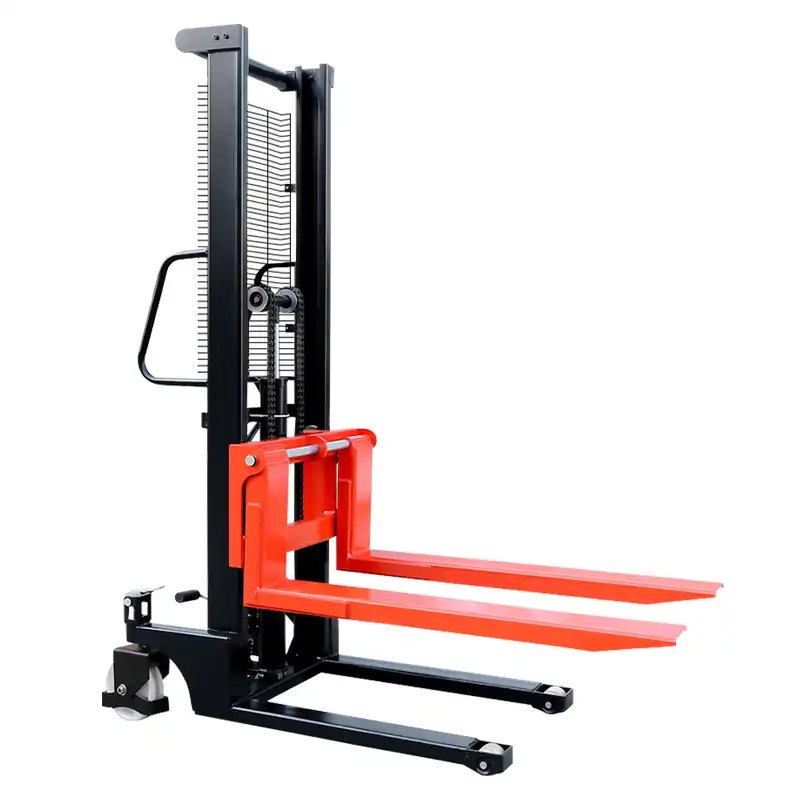
How Hydraulic Manual Stackers Work: Understanding the Operating Principle
The hydraulic lifting mechanism: Force multiplication through fluid pressure
The operation of hydraulic manual stackers is based on what's known as Pascal's Principle, where pressure from a confined fluid spreads out evenly in every direction. When someone pumps the handle, it pushes hydraulic oil through the system, and this creates some pretty impressive force multiplication effects, sometimes as high as 25 times the input force according to Industrial Lift Journal from last year. What does this mean for workers? They can actually lift weights over 2,500 kilograms without breaking a sweat, something that would be impossible with traditional methods. These machines work differently compared to old school levers that needed brute strength applied directly. Instead, each stroke of the pump gets translated into smooth upward motion thanks to those carefully designed cylinder and valve systems inside the equipment.
Step-by-step operation of a manual hydraulic stacker
- Position forks under the pallet base with at least 75% load coverage
- Engage the release valve to lower forks to the starting position
- Pump the handle rhythmically (8–12 strokes typically lift 1 meter)
- Fluid pressure extends the hydraulic cylinder vertically
- Transport the load using the steerable rear wheel assembly
- Lower loads gradually via the precision metering valve
The entire cycle takes 30–60 seconds, depending on lift height and operator experience.
Comparison with non-hydraulic and powered lifting alternatives
| Feature | Hydraulic Manual | Mechanical Lever | Electric Powered |
|---|---|---|---|
| Max Capacity | 3,000 kg | 1,200 kg | 5,000 kg |
| Lift Speed | 15 cm/stroke | 5 cm/stroke | 30 cm/sec |
| Energy Source | Human Power | Human Power | Electricity |
| Maintenance Interval | 500 hours | 200 hours | 250 hours |
Manual hydraulic models outperform lever systems in heavy-load scenarios while avoiding the infrastructure costs of electric alternatives. However, they require more operator effort than automated solutions for high-frequency tasks.
Advantages of Hydraulic Manual Stackers in Material Handling
Cost-Effective Solution for Low- to Medium-Volume Operations
Manual hydraulic stackers can lift heavy loads while costing about 60 to 75 percent less than electric models according to Material Handling Quarterly from last year. These stackers work great in smaller operations where warehouses only need to move goods around maybe 50 times per day or fewer since there's no real need for fancy automated systems here. The simple mechanics mean workers don't require much training and repairs aren't so expensive either. A quick fix like replacing hydraulic seals usually runs between thirty five and eighty bucks once a year, whereas fixing parts on electric systems tends to set companies back over three hundred dollars each time something goes wrong.
Energy Efficiency and Independence From External Power Sources
By harnessing fluid pressure through manual pumping, hydraulic stackers operate without batteries or electricity. This makes them well-suited for cold storage, outdoor yards, and remote sites with limited power access. Over a 5-year lifecycle, operators report 40% lower energy costs compared to electric models (Logistics Tech Review 2023).
Durability and Low Maintenance Requirements of Hydraulic Systems
Sealed hydraulic circuits keep contaminants out, so maintenance folks just need to check and change fluids once a year. The main parts, especially those forged steel pump cylinders, can handle over 15,000 lift cycles before needing attention. That's almost twice as long lasting as standard mechanical chain systems. Looking at real world performance from 2022 tests, around 87 percent of these hydraulic stackers were still going strong after ten years on the job. Meanwhile, only about two thirds of electric models made it through the same timeframe without major issues. Makes sense why many warehouses stick with hydraulics for their heavy lifting needs.
Real-World Impact: Case Study on Warehouse Efficiency Gains
A regional distribution center reduced lift equipment downtime by 70% after replacing aging electric stackers with hydraulic models. Maintenance logs revealed:
| Metric | Before Hydraulic | After Hydraulic | Change |
|---|---|---|---|
| Monthly repairs | 4.2 | 1.1 | -74% |
| Load shift incidents | 18 | 3 | -83% |
| Fuel/electric costs | $420 | $0 | -100% |
The transition freed up 240 annual labor hours for inventory management while maintaining throughput.
Limitations and Challenges of Manual Hydraulic Stackers
While hydraulic manual stackers offer cost and maintenance benefits, their operational constraints require careful evaluation. These devices face inherent trade-offs between manual control and mechanical efficiency that impact long-term usability.
Labour Intensity and Ergonomic Concerns in Prolonged Use
Manual pumping needs around 40 to 60 force applications for each pallet cycle, as noted in recent OSHA ergonomic standards from 2022. Workers who do over 100 lifts every day run a much greater chance of developing repetitive strain injuries. Warehouse research indicates workers doing manual lifting suffer wrist and shoulder problems at about 27% higher rates than colleagues with automated systems. The situation gets even worse when dealing with full load capacities or navigating rough ground conditions throughout the facility.
Operator Fatigue and Reduced Productivity in High-Demand Environments
Facilities handling more than 80 pallets each hour typically see a decline of around 15 to 22 percent in productivity during an eight hour workday when relying on manual hydraulic stackers, according to the Deloitte Warehouse Efficiency Report from 2023. The problem becomes even worse in warehouses running multiple shifts because workers simply can't maintain the same level of performance as machines would. Looking at recent data from the Material Handling Labor Study in 2024, nearly two thirds of all operators said their ability to place items accurately dropped off significantly after just four straight hours on the job.
When Automation Becomes More Economical Than Manual Systems
Looking at the full picture, manual hydraulic stackers start costing more than they save once operators reach about 150 lifts during a single shift. When companies handle over 25,000 pallets each year, switching to semi automatic electric models actually cuts down on overall expenses by roughly 18 to maybe even 24 percent over five years, even though these machines come with a bigger price tag upfront according to Logistics Quarterly from last year. Most businesses find that their investment pays off somewhere between two and three years later, especially those running medium sized or larger facilities where there's consistent work going on day after day.
Types and Applications of Hydraulic Manual Stackers
Standard Low-Lift vs. High-Lift Models: Matching Height to Needs
When it comes to hydraulic manual stackers, there are basically two types worth considering. The low lift ones work great for moving things around horizontally when dealing with lighter loads, typically anything below 1500mm height range. Then we have those tall stackers that go all the way up to 3000mm which are fantastic for stacking items multiple levels high in crowded warehouse spaces where every inch counts. A recent report from Material Handling folks showed something interesting too Warehouse operations that switched to these taller models saw their workers spend 22 percent less time on repositioning tasks than before they made the switch. Makes sense really since getting stuff organized vertically frees up floor space and reduces backtracking.
| Model Type | Typical Load Capacity | Max Lift Height | Common Industries |
|---|---|---|---|
| Low-Lift Stacker | 1,000 - 2,000 kg | 1,500 mm | Retail, Small Batch MFG |
| High-Lift Stacker | 2,000 - 3,000 kg | 3,000 mm | Distribution, Bulk Storage |
Narrow-Aisle Variants for Improved Manoeuvrability
Narrow-aisle stackers feature reinforced outriggers and 360° swivel casters, enabling operation in aisles as narrow as 1.8 meters. These are widely used in cold storage and urban micro-fulfillment centers where space optimization is critical.
Custom Configurations for Specialized Loads and Industries
Manufacturers customize hydraulic stackers with non-standard forks, drum clamps, and tilt mechanisms for cylindrical, irregular, or sensitive loads. Aerospace suppliers use corrosion-resistant models with anti-static wheels for engine components, while pharmaceutical warehouses prefer stainless steel builds designed for easy sanitization.
Key Factors to Consider When Choosing a Hydraulic Manual Stacker
Load and Lifting Capacity Relative to Warehouse Clearance and Usage
Make sure the stacker can handle what it typically needs to carry. Going beyond its limits puts both equipment and workers at risk. Warehouse safety reports show around 12% of injuries come from mishandling loads, according to OSHA data from last year. When dealing with oddly shaped stuff, double check if those forks fit properly on standard pallets and racks. Most experienced operators know something important about load testing: try lifting weights that are actually 15 to 20 percent heavier than what's listed. Real world stuff happens all the time - sometimes things aren't balanced perfectly, so this extra margin helps prevent problems down the line.
Manoeuvrability, Size, and Fit in Confined Working Spaces
Measure aisle widths and door clearances before selecting a model. Narrow-aisle units (800 mm wide) enhance access in tight spaces but may require additional operator training. Prioritize models with a turning radius of 1.2 meters and ergonomic handle designs to reduce strain during repetitive tasks.
Floor Conditions and Appropriate Wheel Types for Smooth Operation
| Wheel Material | Best For | Limitations |
|---|---|---|
| Polyurethane | Polished concrete | Poor shock absorption |
| Nylon | Rough/outdoor surfaces | Noisy on smooth floors |
| Rubber | Mixed environments | Prone to cracking in cold |
Match wheel hardness (Shore A scale) to floor texture—softer wheels (70–80 Shore A) perform better on uneven surfaces, while harder wheels (90+) suit clean, debris-free floors.
Build Quality, Safety Features, and Long-Term Scalability
When picking out stackers, go for those built with welded steel frames instead of bolted ones if they'll be used heavily day after day. The welding makes them last much longer under tough conditions. Safety should never be an afterthought either. Look for machines equipped with those automatic valves that hold loads steady so nothing slips down unexpectedly. And don't forget about the overload protection systems that have proper certification marks on them. Thinking ahead is smart business too. Get models that work well with different attachments down the road. Telescoping forks come in handy sometimes, while side shifters open up new possibilities when operations change over time. A little extra compatibility now can save headaches later when needs evolve.
FAQ
What is Pascal's Principle and how does it relate to hydraulic manual stackers?
Pascal's Principle states that pressure applied to a confined fluid is transmitted undiminished in all directions. In hydraulic manual stackers, this principle allows for significant force multiplication, enabling workers to lift heavy loads with less effort.
What are the main differences between hydraulic manual stackers and electric-powered stackers?
While hydraulic manual stackers rely on human power and use fluid pressure to lift loads, electric-powered stackers use electricity to drive lifting mechanisms. Electric models offer greater automation and faster lift speeds but come with higher costs and maintenance requirements.
What are the advantages of using hydraulic manual stackers in low-volume operations?
Hydraulic manual stackers are cost-effective for low- to medium-volume operations. They have lower initial costs, require less maintenance, and are energy-efficient as they don't rely on external power sources like electricity.
Are there ergonomic concerns with using hydraulic manual stackers?
Yes, prolonged use of hydraulic manual stackers can lead to ergonomic issues such as repetitive strain injuries due to manual pumping. In high-demand environments, operator fatigue may also contribute to reduced productivity.
Table of Contents
- How Hydraulic Manual Stackers Work: Understanding the Operating Principle
- Advantages of Hydraulic Manual Stackers in Material Handling
- Limitations and Challenges of Manual Hydraulic Stackers
- Types and Applications of Hydraulic Manual Stackers
- Key Factors to Consider When Choosing a Hydraulic Manual Stacker
-
FAQ
- What is Pascal's Principle and how does it relate to hydraulic manual stackers?
- What are the main differences between hydraulic manual stackers and electric-powered stackers?
- What are the advantages of using hydraulic manual stackers in low-volume operations?
- Are there ergonomic concerns with using hydraulic manual stackers?