
 EN
EN
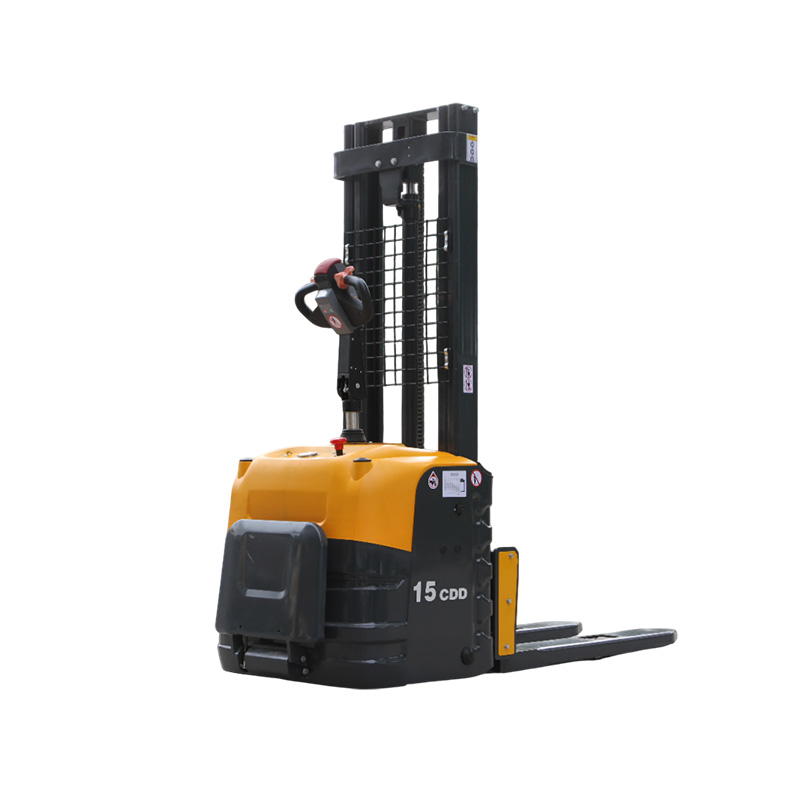
How Warehouse Stackers Improve Inventory Accuracy and Reduce Loss
The Cost of Manual Handling Errors in High-Volume Warehouses
The old way of managing inventory manually in big warehouses actually costs companies a lot of money because people make mistakes. Think about all those wrong picks, things put in the wrong place, and counts that just don't match up. According to research from Ponemon Institute last year, these issues cost around $740,000 each year for a typical warehouse operation. When workers are lifting heavy stuff while racing against deadlines, they tend to make about 27% more mistakes than when systems handle the process automatically. Getting warehouse stackers connected to a proper Warehouse Management System makes a big difference. With real time barcode scans happening right at the spot where items are picked up, we stop those pesky data entry errors before they even start causing problems. For industries such as pharmaceutical manufacturing or electronic component storage, this kind of accuracy isn't just nice to have it's absolutely necessary. A single missing part can mean regulatory trouble and lost customers who no longer trust the supply chain.
| Error Type | Manual Handling (%) | Stacker-Assisted (%) | Cost Impact |
|---|---|---|---|
| Mispicks | 8.2 | 1.3 | $48k/month |
| Lost Items | 5.7 | 0.9 | $32k/month |
| Count Variance | 6.9 | 1.1 | $41k/month |
Source: Logistics Operations Review, 2023
When seasons change and demand jumps, traditional workflow systems tend to fall apart pretty badly. Error rates shoot up sometimes by around 30 or 35 percent during these busy periods. That's where modern electric warehouse stackers come in handy. These machines have built in weight sensors plus automatic height detection capabilities. What happens is when workers place a pallet somewhere, the system automatically records where it goes and what's inside. Warehouses that switched to this tech tell us their cycle counts speed up by about 28 percent on average. They also see roughly 19 percent fewer times when products run out completely. The bottom line? Less money wasted on write offs and better chances of getting orders filled correctly when customers need them most.
Maximizing Vertical Space and Aisle Efficiency with Warehouse Stackers
Unlocking Ceiling Height Potential in Dense Urban Fulfillment Centers
Warehouses in cities can boost their storage capacity by nearly half when they start making use of all that empty vertical space with electric stacker machines. These devices let workers store goods safely at heights over ten meters tall, which matters a lot in places where ground space costs upwards of $150 per square meter every year. Traditional forklifts need plenty of room to maneuver between shelves, but the newer stackers work just fine in tight spaces within those high ceiling warehouses while still keeping things safe and moving efficiently through the facility. Take one fulfillment center in Tokyo as proof. After installing these narrow aisle stackers, they managed to double what they could store inside without actually building anything new or buying extra land.
Balancing Lift Height, Stability, and Maneuverability in Compact Layouts
Optimizing warehouse stacker configurations requires balancing three interdependent factors:
- Lift height: Higher reaches (8m+) unlock vertical density but increase tip-over risk if not paired with dynamic stability controls
- Stability: Counterbalanced and low-center-of-gravity designs maintain safety during lateral movement—even at full capacity and maximum lift height
- Maneuverability: Zero-tail-swing models pivot cleanly in sub-2m aisles, eliminating load overhang that compromises narrow-rack integrity
Facilities prioritizing this triad reduce product damage by 37% while sustaining 99%+ operational uptime. Success hinges on matching equipment to your SKU profile: lightweight electronics benefit from compact pedestrian stackers; dense, palletized goods require ride-on models with reinforced hydraulic stability and tilt compensation.
Selecting the Right Warehouse Stacker: Capacity, Power, and Operational Fit
Avoiding Throughput Bottlenecks Through Load Profile–Driven Equipment Matching
When warehouse stackers don't match up properly, they end up creating expensive bottlenecks in operations. Putting smaller capacity machines on heavy pallets leads to partial loading situations, which actually increases the number of trips needed by around 40%, according to Logistics Tech Review from last year. To stop this kind of waste happening, warehouses really need to look at their actual load profiles. What are the typical weights? The maximum weights? How big are those pallets? How often do things get moved around during different shifts? Take the example of a 2,000 kg stacker used mostly for 800 kg loads. That machine is just burning fuel unnecessarily and wearing out components faster than needed. On the flip side, if an underpowered unit keeps trying to handle regular 1,500 kg loads, it's going to break down sooner rather than later. Matching equipment to how intense the work area is makes all the difference. For spots where picking happens constantly throughout the day, lithium-ion powered stackers with good battery life and fast charging become essential. But in areas where heavy lifting only occurs occasionally, companies should focus more on hydraulic systems that stay stable and masts built to withstand tough conditions when needed.
Pedestrian vs. Ride-On vs. Straddle Warehouse Stackers: A SKU- and Space-Based Decision Framework
| Type | Best For | Space Savings |
|---|---|---|
| Pedestrian | High-density small SKUs | 1.8m aisle clearance |
| Ride-On | Large pallets (1,200 kg) | Requires 2.5m aisles |
| Straddle | Mixed loads in confined spaces | 30% tighter than ride-on |
In e-commerce fulfillment centers where they store all those small items that sell fast, pedestrian stackers really shine. These machines can zip through 1.8 meter wide aisles and handle over 100 moves each day without wearing out operators too much. For manufacturing warehouses dealing with heavy stuff like engine blocks or steel coils, ride-on models work best. They provide good stability and control needed for lifting around 1.5 tons continuously throughout shifts. Straddle stackers find their sweet spot in urban micro-fulfillment locations. These compact spaces often deal with oddly shaped or oversized products that need to be moved through aisles narrower than 2.2 meters. And when warehouse owners start looking at floor space prices above $200 per square meter, it makes sense to go with narrow aisle electric stackers. Look for models with electronic tilt sensors and load sensing hydraulics these days since every bit of efficiency counts when space is so expensive.
Safety-Centric Operation: Training, Stability, and Compliance for Warehouse Stackers
Running warehouse stackers requires strict safety measures all the time, not only because regulations demand it, but also because this keeps operations running smoothly without interruptions. Good training for operators is absolutely essential. They need to learn how loads behave, understand the controls specific to each machine, know what to do when emergencies happen, and spot potential dangers before they become problems. The whole point is making sure operators really get into their heads the basics of stability, especially that famous "stability triangle" idea everyone talks about. Without this knowledge, there's serious risk of tip overs when lifting heavy stuff high up, taking sharp corners, or moving around on floors that aren't level. And let's face it, nobody wants accidents messing up production schedules. Regular refresher courses every year help keep these important practices fresh in mind, particularly when dealing with crowded storage areas, managing different types of cargo together, and handling situations where weights shift unexpectedly while moving.
Compliance isn't just about training sessions either. Daily checks before operations start, keeping track of maintenance records, and following those OSHA/ANSI B56.1 guidelines regarding how high pallets can be stacked, where loads should sit, and what restraints operators need—all these matter too. Warehouses that set up proper safety protocols tend to report around 40 percent fewer accidents when moving materials according to data from National Safety Council back in 2022. When companies bring together trained personnel, well maintained machinery, and actually think ahead about potential risks, they find out something interesting happens: safety doesn't come at the expense of getting work done efficiently anymore. Instead, both become parts of the same equation.
FAQ Section
What are the main advantages of using warehouse stackers?
Warehouse stackers improve inventory accuracy, reduce loss, maximize vertical space, enhance aisle efficiency, and improve safety and operational compliance.
How do warehouse stackers help reduce errors?
By automating processes, integrating with warehouse management systems, and utilizing real-time barcode scans, stackers minimize human errors inherently caused by manual handling.
What types of warehouse stackers are available?
Types include pedestrian, ride-on, and straddle stackers. Each type is best suited for specific load profiles and warehouse configurations.
How does training influence the safety and efficiency of warehouse stackers?
Proper training ensures that operators understand stability concepts, machine controls, and emergency protocols, leading to fewer accidents and smoother operations.
Why is it important to match warehouse stacker capabilities to load profiles?
Matching ensures optimal use of stackers, prevents bottlenecks, and reduces wear and tear on equipment, leading to increased efficiency and reduced operational costs.
Table of Contents
- How Warehouse Stackers Improve Inventory Accuracy and Reduce Loss
- Maximizing Vertical Space and Aisle Efficiency with Warehouse Stackers
- Selecting the Right Warehouse Stacker: Capacity, Power, and Operational Fit
- Safety-Centric Operation: Training, Stability, and Compliance for Warehouse Stackers
-
FAQ Section
- What are the main advantages of using warehouse stackers?
- How do warehouse stackers help reduce errors?
- What types of warehouse stackers are available?
- How does training influence the safety and efficiency of warehouse stackers?
- Why is it important to match warehouse stacker capabilities to load profiles?