
 EN
EN
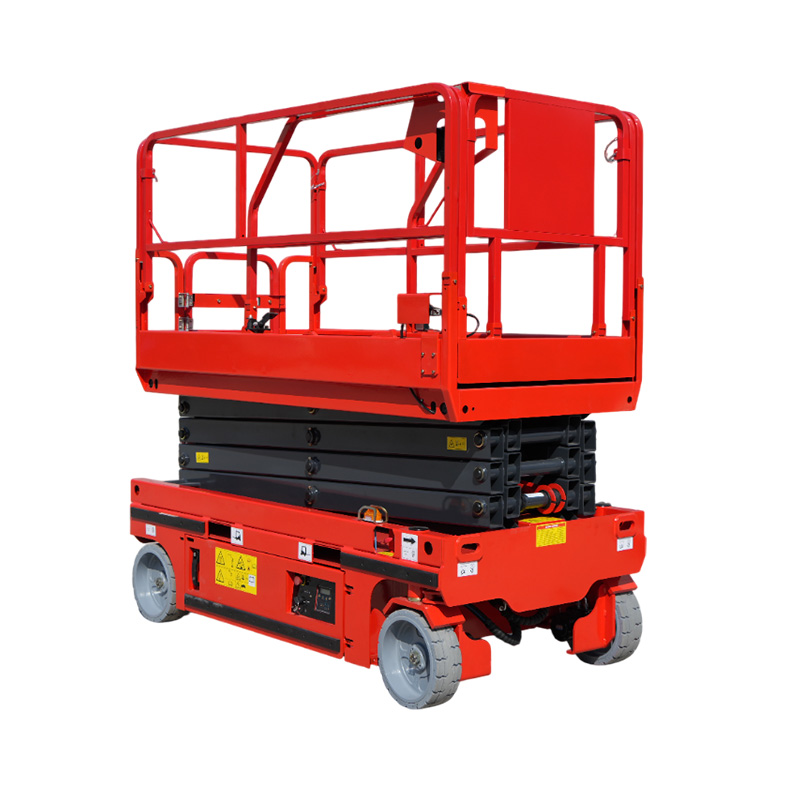
Understanding Scissor Lift Safety Compliance: OSHA and ANSI Requirements
OSHA 29 CFR 1926.453: Key Mandates for Scissor Lift Use in Construction
OSHA’s scissor lift regulations prioritize accident prevention through enforceable operational protocols. Employers must ensure:
- Comprehensive operator training covering hazard identification, emergency response, and equipment limitations
- Daily pre-use inspections of controls, guardrails, hydraulic systems, and structural components
- Site-specific hazard assessments—including surface conditions, overhead hazards, and wind exposure—before deployment
- Strict adherence to fall protection requirements and manufacturer-specified load capacity limits
OSHA reported 10 fatalities and 20 severe injuries involving scissor lifts in a single year—underscoring the real-world consequences of non-compliance. To demonstrate adherence during audits, employers must retain documentation of all training sessions and inspection records.
ANSI A92.6–2022: Structural Integrity, Control Systems, and Platform Stability for Scissor Lifts
ANSI A92.6–2022 provides the technical foundation that supports OSHA enforcement—detailing performance criteria for design, testing, and safe operation. Key requirements include:
- Platform guardrails engineered to withstand a 300-pound force applied in any direction
- Dual-control descent systems requiring simultaneous activation to prevent accidental lowering
- Stability testing at maximum platform height under rated load and worst-case surface slope (up to 3°)
- Manual emergency descent mechanisms operable without external power or hydraulic pressure
Even though it's technically voluntary, ANSI A92.6-2022 gets brought up quite often by OSHA through their General Duty Clause whenever there are accidents caused by problems with structures or control systems. Wind speed indicators become mandatory for any lifts meant to operate over 20 feet high according to this standard. There's also something called structural fatigue testing required where they check if each model can handle around 10,000 complete lift cycles before showing signs of serious wear and tear. Manufacturers need to prove their equipment meets these standards to stay compliant and avoid potential legal issues down the road.
Fall Protection on Scissor Lifts: When Guardrails Suffice—and When PFAS Is Required
The 6-Foot Rule vs. Platform Height Exception: Clarifying OSHA’s Guardrail-Only Provision
OSHA's general rule for fall protection (29 CFR 1926.501) typically calls for protection at six feet height, but there's an established exception when using scissor lifts. If the platform has proper guardrails that are fully enclosed and not damaged, these guardrails can meet requirements as long as they follow OSHA 1926.453 specs. That means top rails between 39 and 45 inches high, plus mid rails and toe boards. Workers need to stay completely inside those guardrails during work operations. Leaning against them, climbing over, or straddling isn't allowed at all. The reason behind this exception makes sense from OSHA's perspective since engineered containment systems work just as effectively as traditional fall arrest methods, assuming everything stays intact after routine checks. However, any changes, damage, or removal of those critical guardrail parts instantly cancels out this special status, leaving workers exposed to potential falls.
When Personal Fall Arrest Systems (PFAS) Become Mandatory for Scissor Lift Operators
PFAS is required whenever guardrail protection is compromised or environmental conditions exceed safe operating parameters. Mandatory use applies when:
- Guardrails are damaged, missing, or altered from original configuration
- Manufacturer instructions explicitly require PFAS for the task or model
- Working in high winds (28 mph), on unstable or sloped surfaces, or near energized conductors
Safety harnesses should always be attached to those specific load-bearing points marked on the lifting equipment, never to railings or nearby structures. Workers need actual practice with putting on their gear correctly, picking good anchor spots, and knowing what happens after someone falls. Important point here: just because we're using PFAS doesn't mean we skip doing our regular risk assessments for each job site. These systems work alongside traditional rail protections when basic safety measures aren't enough on their own to keep everyone safe.
High-Altitude Operational Risks Specific to Scissor Lifts
Wind, Load, and Stability: How Elevation Amplifies Scissor Lift Failure Modes
Elevation dramatically increases sensitivity to environmental and operational variables. At heights above 20 feet, wind forces intensify nonlinearly—gusts exceeding 28 mph can generate destabilizing lateral loads even on stable ground. Three interrelated factors drive elevated failure risk:
- Weight sensitivity: Each additional 100 lbs at maximum extension increases lateral force by up to 40%
- Dynamic loading: Sudden movements (e.g., tool handling or repositioning) induce pendulum-like oscillations absent at ground level
- Surface tolerance: A 3° slope reduces stability margins by 65% at 30 feet—well within typical “level” tolerances for many job sites
Manufacturers’ load charts and environmental limits are not advisory—they reflect validated stability thresholds. Per the Equipment Safety Council (2023), 72% of structural failures occur when operators exceed rated capacities or ignore elevation-specific derating guidance.
Electrical Hazards and Grounding Protocols for Scissor Lifts Near Overhead Lines
Working near energized conductors introduces arc-flash and electrocution risks that escalate with platform height. OSHA’s 10-foot minimum clearance rule applies universally—but high-altitude operations demand layered safeguards:
- Insulated boom certification (per ASTM F1510) when working within 15 feet of conductors
- Grounding systems rated for 50,000 amps minimum to safely dissipate fault currents
- Non-conductive tooling and PPE for all tasks performed above 15 feet
Table: Risk Comparison at Different Elevations
| Hazard Factor | Ground Level | 20–30 ft Elevation |
|---|---|---|
| Wind Impact | Minimal | Critical (3x force multiplier) |
| Load Sensitivity | Moderate | Extreme (150% increase) |
| Electrical Proximity | Direct contact risk | Extended arc-flash radius |
Platform elevation reduces natural grounding efficacy, necessitating engineered solutions such as electrostatic discharge systems. When PFAS is deployed in electrical hazard zones, harness webbing, connectors, and anchorage components must be non-conductive to eliminate unintended current pathways.
Selecting a Compliant Scissor Lift for High-Altitude Applications
Choosing the correct scissor lift starts by looking at what the job actually needs beyond just how high something needs to go. When shopping around, make sure the lift has been tested for platform height limits and load capacity according to ANSI A92.6–2022 standards. Also check that it meets all the safety requirements outlined in OSHA 1926.453 regarding guardrails and overall stability. Outdoors jobs call for rough terrain lifts equipped with outriggers and wider wheel bases. These features cut down on wobbling by about 40% when working above 30 feet and help keep workers safe from being blown around by strong winds. Inside buildings, electric lifts are generally quieter but come with their own set of challenges. Workers need to measure ceiling heights carefully, watch out for tight door frames, and be aware of anything hanging overhead that might get in the way. Something worth remembering is that even small or short lifts still need to follow OSHA's guardrail size rules. Sometimes when space gets really cramped below six feet, employers might need to implement fall protection systems if there's any doubt about whether the guardrails are sufficient or where exactly workers should stand. Before buying or putting any equipment into service, always double check the specs provided by manufacturers against both OSHA and ANSI guidelines. Keeping these documents on file can save a lot of headaches later on.
Frequently Asked Questions (FAQs)
What is the importance of ANSI A92.6–2022?
ANSI A92.6–2022 provides the technical foundation that supports OSHA enforcement. It details performance criteria for design, testing, and safe operation, including standards for platform guardrails, control systems, and platform stability.
When is a Personal Fall Arrest System (PFAS) mandatory for scissor lift operators?
PFAS is mandatory when guardrail protection is compromised or environmental conditions exceed safe operating parameters, such as working in high winds, on unstable surfaces, or near energized conductors.
What are the high-altitude risks associated with scissor lifts?
High-altitude risks include increased sensitivity to wind forces, load sensitivity, dynamic loading, and reduced surface tolerance, which elevate failure risks when operating scissor lifts above 20 feet.
How do OSHA and ANSI standards ensure scissor lift safety?
These standards enforce protocols for operator training, equipment inspection, site hazard assessments, and adherence to load capacity limits, among others, to mitigate risks and ensure safety during scissor lift operations.
Table of Contents
- Understanding Scissor Lift Safety Compliance: OSHA and ANSI Requirements
- Fall Protection on Scissor Lifts: When Guardrails Suffice—and When PFAS Is Required
- High-Altitude Operational Risks Specific to Scissor Lifts
- Selecting a Compliant Scissor Lift for High-Altitude Applications
- Frequently Asked Questions (FAQs)