
 EN
EN
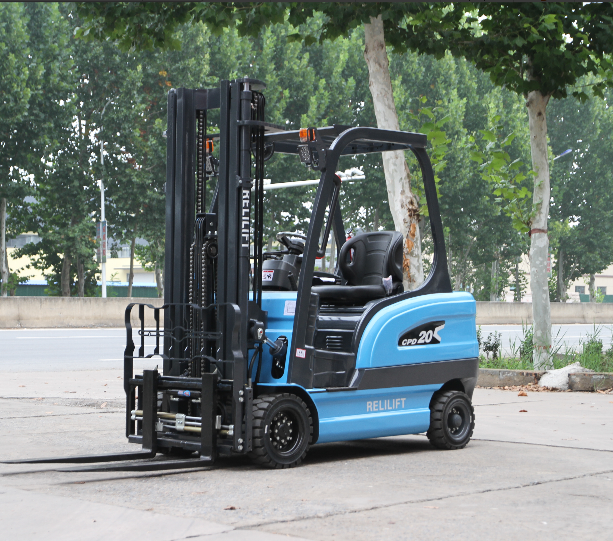
Proactive Collision Avoidance and Pedestrian Detection
360° LiDAR and AI-Powered Real-Time Hazard Mapping
Electric forklifts today come equipped with advanced LiDAR sensors combined with artificial intelligence to create detailed 360 degree maps of their surroundings. These machines work just fine even when there's no light at all, dealing with bright lights or dusty conditions without missing a beat. The scanning process happens at around half a million points every single second, allowing the system to spot people walking nearby, anything blocking the path, and other vehicles within about 25 meters distance. Smart software looks at how things are moving and can predict possible accidents almost three seconds before they might happen, with location accuracy better than half a meter according to studies published in industrial robotics journals. Traditional camera systems often struggle when there isn't much contrast or when lighting changes throughout the day, but LiDAR keeps performing consistently whether it's in big open spaces where pallets are stacked or tight corridors between storage racks. The safety map gets refreshed sixty times each second, constantly adjusting what area is considered safe as conditions shift around the warehouse floor.
Tiered Response Protocol: Alert → Deceleration → Autonomous Braking
The safety system works through layers of response designed around how people actually react. First come the visual warnings and directional sounds when something gets within 8 meters of the equipment. If there's no response from the operator in about 0.8 seconds, the machine slows down by half without tipping over whatever it's carrying. When things get really close - usually under 3 meters away - the system calculates a high chance of crash and hits the brakes automatically in just 0.3 seconds thanks to backup hydraulic circuits. This step-by-step approach cuts down on unnecessary warnings but still keeps everyone safe. Warehouse reports from 2024 show these multi-level systems cut accidental crashes by nearly two thirds compared to older setups that only had one warning stage or brake mechanism.
Key Response Stages
| Stage | Trigger Threshold | Action | Response Time |
|---|---|---|---|
| Alert | Hazard in 8m radius | Warning lights + audible alarm | Instant |
| Deceleration | Hazard in 3m radius | Speed reduction to 3.5 mph | <0.8 sec |
| Braking | Imminent collision | Full stop with stability control | <0.3 sec |
Operator Protection: Restraint, Stability, and Emergency Response
Integrated Seatbelt + Proximity-Sensing Interlock Systems
The safety system keeps operators restrained using two sensors working together. One checks if the person is actually sitting down properly, and another makes sure the seatbelt is fastened before allowing any movement or lifting action to happen. When something goes wrong during operation like someone moving suddenly or getting out of their seat, the whole system stops right away. Forklift accidents where people get thrown out make up about 42 percent of deaths in warehouses according to recent stats from the US labor department. There's also constant monitoring of how weight is distributed across the vehicle. If the computer detects that the balance point has shifted in an unsafe way, it will shut off the mast lifting function completely. This helps keep workers inside the protective frame above them at all times.
ISO 3691-4–Compliant Emergency Power Cut-Off and Tip-Over Mitigation
Meeting ISO 3691-4 standards means machines can react fast when things start going sideways during a rollover. The gyroscopic sensors pick up on early signs of instability and shut off the battery power in about half a second. At the same time, hydraulic systems lock down the mast so loads don't shift around, and those heavy duty overhead guards take the brunt of whatever impact happens. What makes this system really effective is how it kicks in before a full rollover even starts. When the machine tilts laterally past 5 degrees, the safety mechanisms activate, giving operators precious moments to correct course or slow things down safely.
Intelligent Load and Stability Management for Electric Forklifts
Real-Time Center-of-Gravity Calculation via IMUs and Load-Sensing Hydraulics
Modern electric forklifts constantly monitor their balance through built-in Inertial Measurement Units (IMUs) along with hydraulic pressure sensors. These sensors keep tabs on shifting weights as the machine lifts, moves around, and tilts its mast, making stability adjustments within fractions of a second. If the side tilt gets close to 5 degrees or if the cargo isn't distributed properly, drivers get physical feedback through their seats plus visual alerts on screen. Warehouse accidents from forklift tipping account for about 24% of all fatalities according to OSHA data from 2023, so having these instant responses isn't just extra it's essential for safety. When there's a heavy load at the top or rough ground conditions raise the chance of tipping over, the stability system kicks in automatically to slow down movement or limit certain mast operations.
AI-Driven Overload Prediction Using Battery Discharge, Mast Angle, and Motion Data
ML models can spot potential overloads by looking at how batteries discharge, where the mast extends, acceleration patterns, and hydraulic stress points. When there's unusual current draw happening at the same time as forward mast tilt and increased turning torque, it usually means things are getting unstable. The system then slows down automatically and locks hydraulics in place before anything actually shifts. According to tests published last year in Industrial Safety Journal, these kinds of predictions cut down on load shifting accidents by about 40% compared to older reactive methods. What's really nice is that workers don't even notice any interruptions in their normal operations while this happens.
Battery Safety: Thermal Runaway Prevention and BMS Integrity
The lithium ion batteries used in electric forklifts need several layers of protection to stop thermal runaway from happening. Thermal runaway occurs when one cell starts overheating and this heat spreads through the whole battery pack in what's basically an out of control chemical reaction. To prevent these problems, manufacturers rely heavily on good quality Battery Management Systems or BMS for short. These systems monitor both voltage levels and temperatures down to the millisecond, plus they have backup controls that can spot issues early before things get bad. For keeping temperatures under control, active cooling methods matter a lot too. Liquid cooling systems work best when paired with sensors at each individual cell level. And if temps go past 60 degrees Celsius, the system should shut itself off automatically. According to research from Ponemon Institute last year, companies face average costs over seven hundred forty thousand dollars whenever there's a failure in their BMS setup. That kind of money loss makes it clear why separating different types of risks related to electricity, heat, and mechanics isn't just smart business practice anymore, it's practically required for anyone wanting reliable operations.
FAQ
What is LiDAR technology used for in forklifts?
LiDAR is used to create detailed 360-degree maps of the forklift's surroundings, detecting pedestrians, obstacles, and other vehicles to prevent collisions.
How does the safety system in forklifts prevent accidents?
The system uses a tiered response protocol with alerts, deceleration, and autonomous braking, cutting down on accidental crashes by nearly two-thirds.
What is the role of IMUs in forklifts?
IMUs monitor the balance of forklifts, making stability adjustments within fractions of a second to prevent tipping and accidents.
Why are Battery Management Systems essential for forklift safety?
Battery Management Systems prevent thermal runaway by monitoring voltage and temperature, ensuring safe operation and preventing costly failures.