
 EN
EN
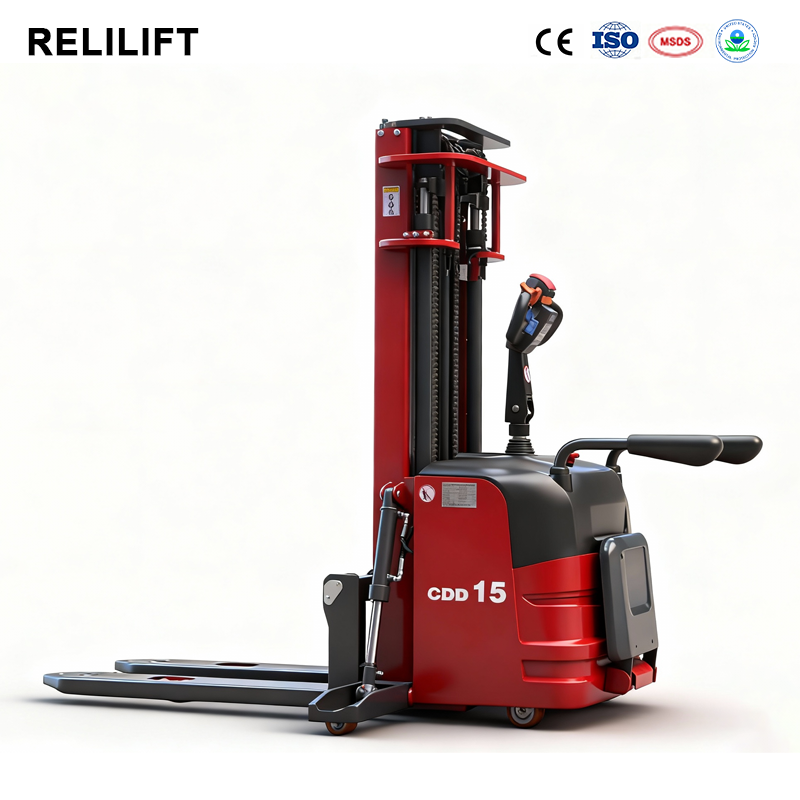
How Electric Stacker Accelerates Throughput and Reduces Cycle Times
35–40% Faster Cycle Times vs. Manual Pallet Jacks: Real-World Workflow Impact
Electric stackers reduce material handling cycle times by 35–40% compared to manual pallet jacks—a figure validated by the Material Handling Industry (MHI) 2023 benchmark study. This performance leap arises from three integrated advantages:
- Motorized lifting and travel, enabling consistent speeds of 8–10 km/h regardless of load weight—eliminating operator fatigue-induced slowdowns
- Single-operator workflow integration, merging transport and stacking into one seamless motion
- Precision positioning systems, cutting pallet alignment errors by ~80% and minimizing re-handling delays
The result is 12–15 additional pallet moves per hour—directly accelerating order fulfillment. At a major North American distribution center, this gain resolved chronic dock congestion during peak season, slashing average trailer wait times from 3.5 hours to just 47 minutes.
Lithium-Ion Power and Regenerative Braking: Sustained Performance Without Downtime
Modern electric stackers eliminate legacy battery constraints through purpose-built lithium-ion powertrains and regenerative braking:
| Feature | Productivity Impact | Downtime Reduction |
|---|---|---|
| 100% charge in 75 mins | Enables multi-shift operation with rapid-swap flexibility | 87% less downtime vs. lead-acid |
| Regenerative braking | Recaptures 15–20% of kinetic energy during descent | Extends runtime by 90+ minutes per cycle; reduces cell degradation |
| Zero maintenance | No watering, equalization, or acid monitoring required | Saves 25 labor-hours/month per unit |
These features collectively sustain near-peak performance across extended shifts. Operational data shows lithium-powered units maintain 98% of rated lifting capacity throughout battery life—versus 74% for traditional alternatives—ensuring consistent vertical throughput without decay.
Electric Stacker Maneuverability in Constrained Warehouse Aisles
Sub-1.6m Turning Radius and Zero-Turn Steering for High-Density Layouts
Electric stackers really shine when space is at a premium. With turning radii under 1.6 meters and those zero turn capabilities, operators can pivot completely around corners without all that back and forth dancing most equipment needs. Facilities with narrow aisles (often less than 2.5 meters wide) find these machines game changers since they eliminate the need for special turning areas that bigger equipment requires. Warehouse managers typically see about 15 to maybe 20 percent more storage spots available after switching to these compact models, reaching into rack locations regular forklifts just can't touch. The quick response times make a big difference too, cutting down on damaged goods by roughly 30% during those tricky tight turns. What used to be a problem area becomes an efficient workflow zone without having to tear anything apart or rebuild the facility layout from scratch.
Optimizing Vertical Storage Density with Electric Stacker Lift Capabilities
Leveraging 4.2–5.5m Lift Heights for Mezzanine and Multi-Tier Racking
Electric stackers with lift heights ranging from around 4.2 to just over 5.5 meters open up previously wasted vertical space in warehouses, allowing facilities to boost storage capacity threefold without needing more floor area. These machines work well with multi tier racking systems as well as mezzanine floors, transforming empty spaces above into areas where inventory can be stored and accessed easily. Compared to traditional floor storage methods, going vertical reduces how far workers need to walk between locations by roughly 40% to maybe even 60%. Plus, it keeps things ergonomically friendly for those grabbing items off shelves. Warehouse staff can reach every single pallet level without climbing ladders anymore. When combined with narrow aisle designs, these stacking solutions make full use of ceilings that go up to about 11 meters high, effectively turning what was once dead air space into valuable storage volume that generates actual revenue for businesses.
Right-Sizing Electric Stacker Load Capacity to SKU Profile and Rack Bay Depth
Matching stacker capacity to SKU characteristics and rack geometry is essential for safety, efficiency, and space utilization. Analyze weight distribution, dimensions, and bay depth to select units with 1–3 tonne capacities aligned to your storage architecture:
| SKU Profile | Recommended Capacity | Rack Depth Alignment |
|---|---|---|
| Small parcels | 1,000 kg | ≥ 1.2m shallow bays |
| Industrial parts | 1,500–2,000 kg | 1.5m standard bays |
| Dense materials | 2,500–3,000 kg | ≥ 1.8m deep bays |
Over-specifying risks structural overloading; undersizing leaves vertical space untapped. Leading operations validate capacity against peak inventory density using digital twin simulations before deployment—ensuring every pallet position remains safe, accessible, and fully utilized.
Tangible Operational ROI: Safety, Labor Savings, and Payback from Electric Stacker Investment
14-Month Median Payback Confirmed by MHI 2023 Data – Drivers and Validation
The Material Handling Industry looked at over 200 facilities last year and found that electric stackers typically pay for themselves around the 14 month mark. Most of the money saved comes from better labor management actually. When companies automate those lifting and stacking tasks, they need fewer staff members but still get more work done per person. Plus, the ergonomic designs make a real difference too. Companies report injury rates falling by as much as 32% when switching to these machines, which means fewer worker comp claims and less unexpected downtime. And let's not forget about energy costs either. The newer lithium ion models cut electricity bills between 18% and 25% compared to older equipment. All these benefits combined usually cover the initial purchase price within just under 15 months, making electric stackers some of the quickest paying off investments in warehouse operations right now.
FAQ
What are the main benefits of using electric stackers?
Electric stackers offer faster cycle times, reduced manual labor, precision movement, improved battery efficiency, and better maneuverability, especially in tight spaces, compared to manual pallet jacks.
How does regenerative braking help electric stackers?
Regenerative braking recaptures energy during descent, extending the runtime by adding extra minutes per cycle and reducing wear on the battery.
What is the typical payback period for investing in electric stackers?
The payback period is usually around 14 months, considering labor savings, enhanced efficiency, reduced injury rates, and lower energy costs.
How do electric stackers increase storage density?
By allowing vertical storage with lift heights up to 5.5m and excellent maneuverability in narrow aisles, electric stackers maximize warehouse space without expanding the facility's footprint.
Table of Contents
- How Electric Stacker Accelerates Throughput and Reduces Cycle Times
- Electric Stacker Maneuverability in Constrained Warehouse Aisles
- Optimizing Vertical Storage Density with Electric Stacker Lift Capabilities
- Tangible Operational ROI: Safety, Labor Savings, and Payback from Electric Stacker Investment
- FAQ