
 EN
EN
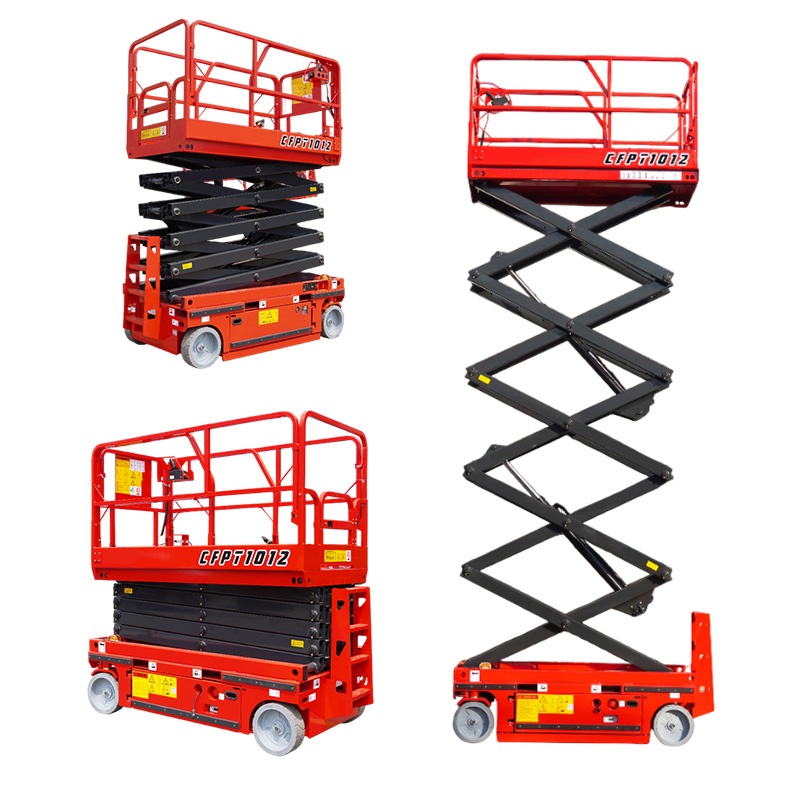
Compact Design and Space-Saving Dimensions of Mini Scissor Lifts
Engineering compact scissor lift design for space-constrained environments
Mini scissor lifts were made with tight spaces in mind, think server rooms, those really narrow hallways, even up in ceiling cavities where bigger equipment just won't fit. The whole point is their small size lets workers get around places that regular lifts simply can't reach. Manufacturers have been working hard to pack all necessary parts into these little machines while still keeping them tough enough for daily use. They've managed this by cleverly arranging components and using stronger materials than before. When it comes down to it, this space-saving design really makes a difference for people working in data centers, hospital maintenance areas, and old buildings undergoing renovations.
How reduced frame size maintains stability without sacrificing performance
Mini scissor lifts might have smaller bases but they stay stable thanks to their strong frame construction and how weight is spread out across the unit. The design includes things like offset pins and keeps the center of gravity low which helps prevent the platform from swaying when it goes up. All these engineering improvements mean operators can work safely without worrying about wobbling, even when the lift reaches maximum height. What's interesting is that these compact units perform just as well as their bigger counterparts despite their size. They pack enough lifting power to handle most jobs in confined areas where space is really limited.
Comparing standard vs. micro-sized scissor lift footprints
Most micro sized models come in at around 30 inches across and about 58 inches long, which means they can fit right through regular doorways without any hassle. Industry reports from 2025 on scissor lift specs show these compact sizes represent quite a drop compared to standard units that usually run over 36 inches wide and hit 72 inches or more in length. With such a small footprint, these machines get into tight spots where bigger equipment would struggle, making them real workhorses in warehouses, retail stores, and other places where space is at a premium.
Data point: 70% reduction in deck area compared to mid-sized models
Industry testing confirms micro-sized scissor lifts achieve up to 70% reduction in deck area compared to mid-sized alternatives. This compactness enhances maneuverability in narrow aisles and tight corners. The smaller platform still supports full operational capacity, making it ideal for indoor maintenance where space and precision are critical.
Superior Maneuverability in Tight and Sensitive Indoor Spaces
Applications in Narrow Spaces: Server Racks, Ceiling Voids, and Hospital Corridors
Mini scissor lifts can boost space utilization around 45 percent better than regular ones when working in tight spaces. These compact machines work great in areas just 28 inches wide, which is why they're so valuable for tasks like setting up server racks inside data centers or getting into those hard to reach spots above ceilings in old buildings. They also navigate easily through typical hospital corridors that measure about 36 inches wide without bumping into delicate medical gear. This kind of maneuverability really matters where every inch counts.
Zero Inside Turning Radius and Enhanced Steering for Precise Indoor Navigation
Advanced models feature zero inside turning radius via articulated axle systems, enabling 360° rotation within their own footprint. Operators can reposition with ±1" accuracy, critical in environments like laboratories and art galleries where contact must be avoided. Rubber-coated casters with 80° swivel range support heavy loads while protecting flooring.
Case Study: Efficient Movement Through Hospital Corridors Using Compact Steering Control
A 12-month trial at a Level I trauma center showed 62% faster equipment transport using mini scissor lifts with laser-guided steering systems. The lifts navigated neonatal ICU zones with less than 0.5 dB noise increase and maintained 6" clearance from medical devices, proving their value in settings requiring silent, non-disruptive operation.
Trend: Adoption of Omnidirectional Wheels in Next-Generation Mini Scissor Lifts
Next-gen models now integrate Mecanum wheel technology, enabling diagonal and crab steering patterns that reduce required maneuvering space by 38%. Early adopters in aerospace manufacturing report 57% fewer repositioning cycles when accessing confined engine bays, driving projected 19% annual market growth for omnidirectional mini scissor lifts through 2028.
Electric Power and Emission-Free Operation for Indoor Safety
Benefits of electric mini scissor lifts in schools, data centres, and cleanrooms
The electric mini scissor lifts don't produce any exhaust fumes, which makes them perfect for places where clean air matters a lot. Teachers and janitors at schools find these handy when they need to work on lights or fix the heating system without worrying about dirty smoke getting into classrooms. Data centers love them too because those fancy servers can get really upset about even tiny bits of soot from regular gas-powered equipment. And let's not forget cleanrooms either, where keeping that ISO 14644 standard intact is basically non-negotiable during routine checks and repairs. These lifts just make sense in spaces where every breath counts.
Low noise operation (under 65 dB) in occupied and sensitive environments
Operating below 65 dB—comparable to normal conversation—these lifts prevent disruptions in occupied spaces. Hospitals perform equipment servicing without disturbing patients, and offices conduct daytime repairs without interrupting work. This quiet performance is 40% lower than diesel alternatives, enabling use in libraries, labs, and theaters.
Balancing battery life with continuous operation demands
Modern electric models use lithium-ion batteries that provide 6–8 hours of continuous operation per charge. Rapid-swap systems allow uninterrupted shifts in multi-story buildings. Energy recovery during descent extends runtime by up to 22%, as demonstrated in full-day school maintenance projects requiring repeated elevation cycles.
Performance: Lifting Height, Load Capacity, and Operational Efficiency
Lifting height under 20 ft: ideal for low-ceiling and interior maintenance tasks
Mini scissor lifts typically reach heights between 10 and 20 feet, making them ideal for low-clearance environments. They support tasks like changing light fixtures, installing ceiling tiles, and servicing HVAC units in offices, retail stores, and warehouses. Their compact vertical reach prevents collisions with overhead structures while enabling efficient access.
Platform capacity up to 500 lbs: supporting single or dual operators safely
These lifts support payloads up to 500 pounds, accommodating two technicians with tools and materials. Reinforced platforms include non-slip surfaces and guardrails for safety. Load-tested components ensure stability at full capacity, even on uneven surfaces. This capability meets the demands of most indoor maintenance and light construction tasks.
Matching payload requirements with mini scissor lift specifications
Selecting the right model requires matching the job’s total weight—operators, tools, and materials—against the lift’s rated capacity. Overloading risks instability and equipment damage. Always consult manufacturer load charts and account for dynamic forces during movement. Proper matching ensures safety and extends equipment lifespan.
Data point: Average load capacity of 500 lbs in leading models
Industry data shows 500 pounds as the average load capacity across top-performing mini scissor lifts. This standard supports 92% of common indoor maintenance applications. The balance between strength and compact design makes it the optimal benchmark for performance in confined workspaces.
Portability, Transport, and Application Across Specialized Sites
Lightweight design and portability for multi-site and rapid deployment scenarios
The mini scissor lifts are built with light weight aluminum alloy frames and come in modular pieces that make transportation simple. At less than 500 lbs total weight, most models will actually fit right into regular service vans without needing any special lifting equipment or extra trailer space. Field technicians love how fast they can set these up at different job sites throughout the day, which cuts down on waiting around between jobs and keeps other gear from sitting idle too long. The ability to move quickly from one location to another really makes all the difference when dealing with urgent repair situations or those last minute facility improvements that always seem to pop up just before closing time.
Compact footprint enabling elevator access and stair-free site entry
With widths under 30 inches, these lifts fit in standard commercial elevators and doorways. They eliminate the need for disassembly or stair transport, enabling direct access to upper floors in office buildings, data centers, and historical sites. This capability reduces labor and speeds up project timelines in multi-level facilities.
Case Study: Airport terminal maintenance using portable mini scissor lifts
At one busy international airport during night shifts, workers replaced lights mounted 25 feet high using those little electric scissor lifts everyone's talking about these days. Since they don't emit any fumes, crews could actually work inside areas where passengers were still walking around without worrying about bad air quality issues. What really made things click was how small those machines are at the bottom, letting them squeeze through tight maintenance pathways that would have been impossible for bigger equipment. The whole job wrapped up three full days ahead of schedule too, and nobody believes this but labor expenses dropped by almost two thirds compared to what it would have cost to set up traditional scaffolding everywhere.
Growing use in data centres, cleanrooms, and IT infrastructure with environmental certifications
More facilities are turning to mini scissor lifts when they need tight environmental control. These compact machines account for around 35% of all aerial equipment used in data centers these days because they run quietly and don't generate static electricity that could harm sensitive components. The design allows them to move through those narrow server rows without bumping into anything or causing damage. Many tech companies now look specifically for models carrying EPD certifications Environmental Product Declarations as part of their green initiatives. This trend reflects growing awareness across the industry about reducing carbon footprints while maintaining operational efficiency.
FAQ
What are mini scissor lifts used for?
Mini scissor lifts are used for reaching tight spaces where larger equipment cannot operate, such as server rooms, narrow hallways, ceiling cavities, data centers, hospital maintenance areas, and historical building renovations.
How stable are mini scissor lifts compared to regular ones?
Mini scissor lifts maintain stability through strong frame construction, efficient weight distribution, offset pins, and a low center of gravity. Despite their compact size, they perform as efficiently as larger scissor lifts.
Are mini scissor lifts environmentally friendly?
Yes, mini scissor lifts with electric power options operate emission-free, making them suitable for cleanrooms, data centers, schools, and other environments where air quality is crucial.
Can mini scissor lifts be used for heavy-duty tasks?
Yes, mini scissor lifts can support payloads up to 500 pounds, accommodating one or two operators safely, even with tools and materials.
Table of Contents
- Compact Design and Space-Saving Dimensions of Mini Scissor Lifts
-
Superior Maneuverability in Tight and Sensitive Indoor Spaces
- Applications in Narrow Spaces: Server Racks, Ceiling Voids, and Hospital Corridors
- Zero Inside Turning Radius and Enhanced Steering for Precise Indoor Navigation
- Case Study: Efficient Movement Through Hospital Corridors Using Compact Steering Control
- Trend: Adoption of Omnidirectional Wheels in Next-Generation Mini Scissor Lifts
- Electric Power and Emission-Free Operation for Indoor Safety
- Performance: Lifting Height, Load Capacity, and Operational Efficiency
-
Portability, Transport, and Application Across Specialized Sites
- Lightweight design and portability for multi-site and rapid deployment scenarios
- Compact footprint enabling elevator access and stair-free site entry
- Case Study: Airport terminal maintenance using portable mini scissor lifts
- Growing use in data centres, cleanrooms, and IT infrastructure with environmental certifications
- FAQ