
 EN
EN
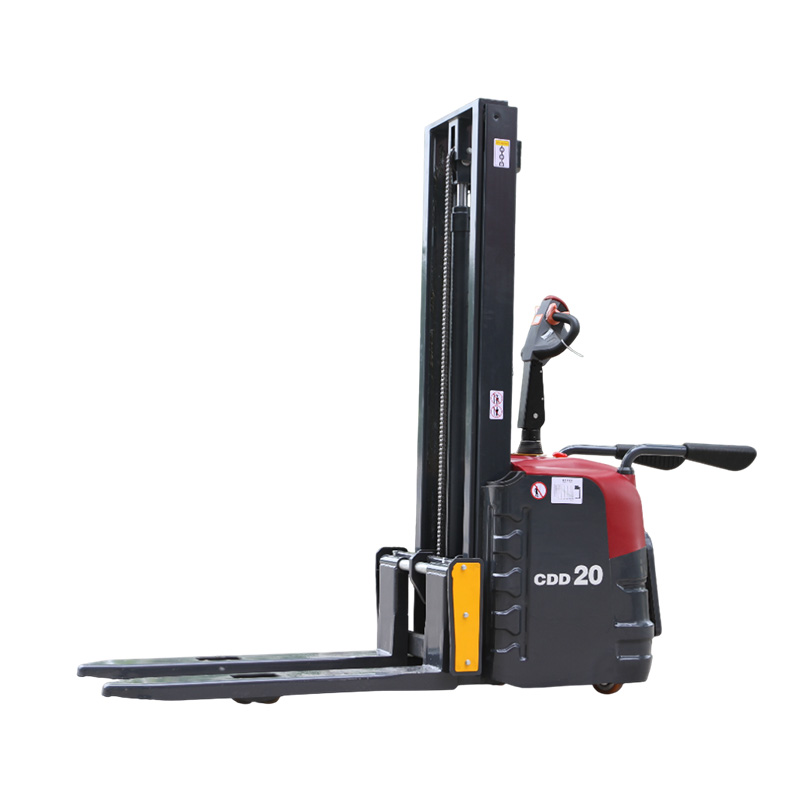
Improved Safety and Operator Ergonomics with Electric Stackers
Reduction of Manual Handling Injuries Through Automation
Electric stackers take away all that heavy lifting when moving pallets around warehouses, which tackles one of the main reasons workers get hurt on the job. According to recent stats from the U.S. Bureau of Labor Statistics, about 38 percent of workplace injuries related to muscles and bones come from manually handling materials. When operators switch from carrying heavy loads themselves to just guiding these machines instead, there's much less stress on their backs and fewer issues with repeated motions. This change makes for a safer environment overall while also creating workflows that last longer without breaking down either equipment or employee health.
Ergonomic Design Features That Minimize Operator Fatigue
Modern electric stackers prioritize human factors through purpose-built ergonomics:
- Adjustable controls positioned at waist height promote neutral postures
- Stand-on platforms with anti-vibration padding support seated or semi-standing operation during transport
-
Low-effort steering, requiring under 5 lbs of force, reduces upper-body exertion
Collectively, these features lower operator fatigue by 45% compared to manual alternatives (Warehouse Efficiency Journal, 2023), supporting longer, more consistent productive shifts.
Built-in Safety Systems: Load Stability, Speed Control, and Collision Avoidance
Safety systems built into equipment help cut down on serious risks during operations while still keeping things running smoothly. Speed governors kick in when moving through crowded areas or dangerous spots, slowing things down automatically. The tilt sensors stop the whole operation if there's any wobbling beyond about 3 degrees angle difference from level ground, which stops those nasty tip-over accidents. For obstacles nearby, proximity sensors pick them up at around six feet away distance and then sound alarms plus hit the brakes automatically. Research looking at warehouse safety shows these multiple layers of protection can bring down collisions by roughly 60 percent in tight aisles where space is limited.
Superior Space Efficiency and Maneuverability for High-Density Warehousing
Compact Footprint and Zero-Turn Steering in Narrow-Aisle Environments
Electric stackers take up around 40% less space compared to those old gas powered models, which means they can actually work reliably even in narrow aisles that are sometimes just under six feet wide. The zero turn steering lets these machines spin completely around inside their own body length something that makes a huge difference when warehouses are packed tight with shelves. When companies switch over, they often find they can fit about half again as much stuff in the same amount of floor space. And because the aisles don't need to be so wide anymore, workers spend less time traveling back and forth between storage areas. Most warehouses we talk to say this cuts down on retrieval times by roughly 30%, though results do vary depending on how organized everything already was before making the change.
Seamless Integration with Racking Systems and Automated Storage Layouts
Electric stacker systems work seamlessly with both traditional static racking setups and automated storage solutions thanks to standard interface protocols. The forks on these machines are positioned with remarkable accuracy (within just 1mm) which means they don't damage racks even when moving at speed during stacking operations. Facilities that have implemented this technology report around 99.8% damage free handling rates, making a real difference in warehouse maintenance costs. When paired with Warehouse Management Systems, these stackers coordinate loads in real time, so there's no waiting around or bottlenecks forming in those complex multi-level storage arrangements. Another big plus is that they eliminate the need for fixed aisles altogether. This opens up possibilities for dynamic slotting strategies that cut down on replenishment labor by about a quarter without sacrificing throughput capacity during busy periods.
Lower Total Cost of Ownership and Strong ROI for Electric Stackers
Energy Efficiency, Reduced Maintenance, and Longer Service Life vs. ICE Models
Switching to electric stackers saves money compared to those old internal combustion engines. On average, these electric models use about 60 percent less power overall, and let's face it, electricity just costs less per unit than burning diesel or propane fuel. The electric systems are simpler too since they don't need all those complicated parts found in traditional machines like transmissions, fuel injectors, exhaust systems, or regular hydraulic fluid replacements. Maintenance becomes a whole lot easier this way, cutting down on repair needs roughly 40% according to industry reports. Machines tend to last longer when there's less going wrong inside them, often adding three to five extra years before replacement is needed. And then there's the battery story. Modern lithium ion tech means these batteries can handle thousands of charge cycles without losing much capacity at all. Plus nobody has to worry about emission tests anymore, which saves time and paperwork for warehouse managers who already have enough headaches keeping operations running smoothly.
Measurable ROI: Productivity Gains, Labor Optimization, and Downtime Savings
Businesses see real benefits in three main areas when they implement these systems. The machines deliver immediate torque and can run continuously without needing to stop for fuel, which generally improves productivity somewhere between 15% and 25%. There's also less maintenance work required overall, plus workers find it easier to switch between different roles since the equipment handles so many functions. Perhaps the biggest advantage though comes from fixing what used to be a major problem: those annoying engine breakdowns that caused unexpected downtime. Companies report cutting this down by around 70%, meaning they get back thousands of lost working hours every year. Most organizations reach their break-even point on investment costs within about 18 to 24 months, after which the cost savings just keep growing as the machinery continues operating reliably for years on end.
FAQ Section
What are the main benefits of using electric stackers over traditional models?
Electric stackers enhance safety, reduce operator fatigue, and improve space efficiency in warehouses. They also provide better energy efficiency, reduced maintenance costs, and a high return on investment over traditional internal combustion engine models.
How do electric stackers improve safety and ergonomics?
Electric stackers come with built-in safety systems such as load stability, speed governors, tilt sensors, and proximity sensors to minimize accidents. Their ergonomic design aids in reducing operator fatigue significantly.
What is the impact of electric stackers on warehouse space efficiency?
Electric stackers have a compact footprint and zero-turn steering, allowing them to operate in narrow aisles and optimize warehouse space by reducing aisle width, hence increasing storage capacity and reducing retrieval times.
How do electric stackers provide a high ROI?
Electric stackers are energy efficient, require less maintenance, and have a longer service life, resulting in decreased operating costs. They also enhance productivity, decrease downtime, and allow for labor optimization.